BERGMÁL - ECHO Hafnarborg 2026
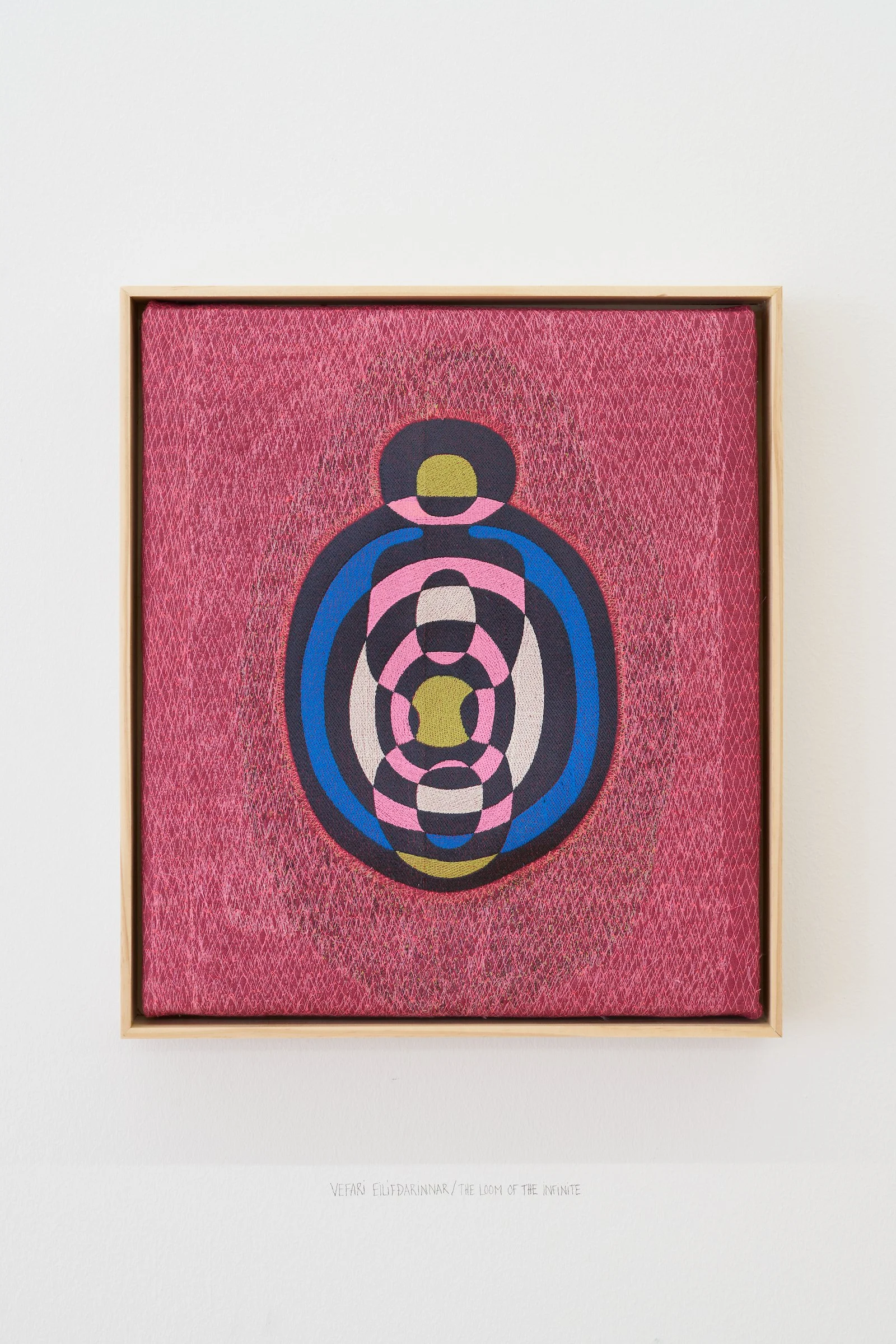
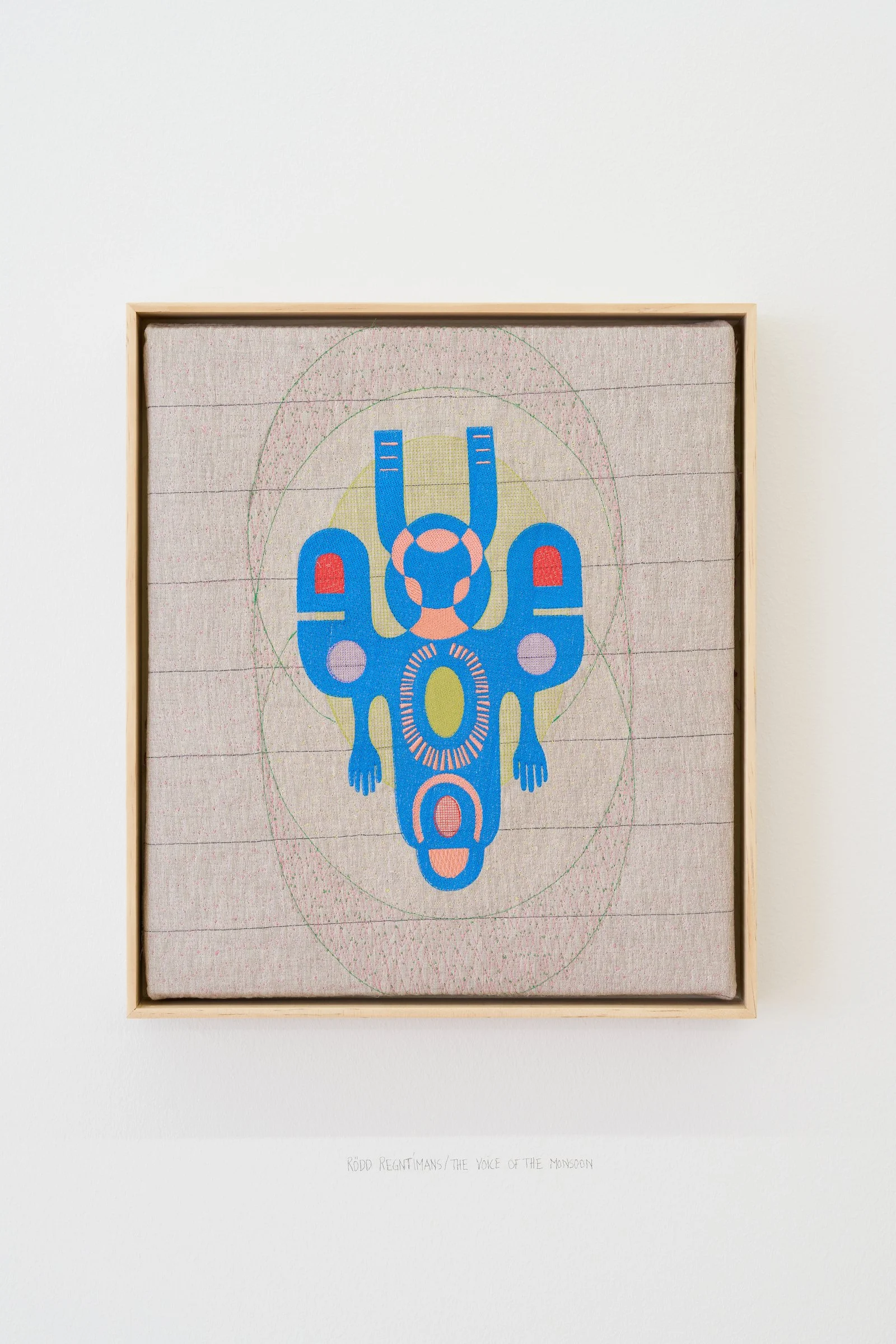
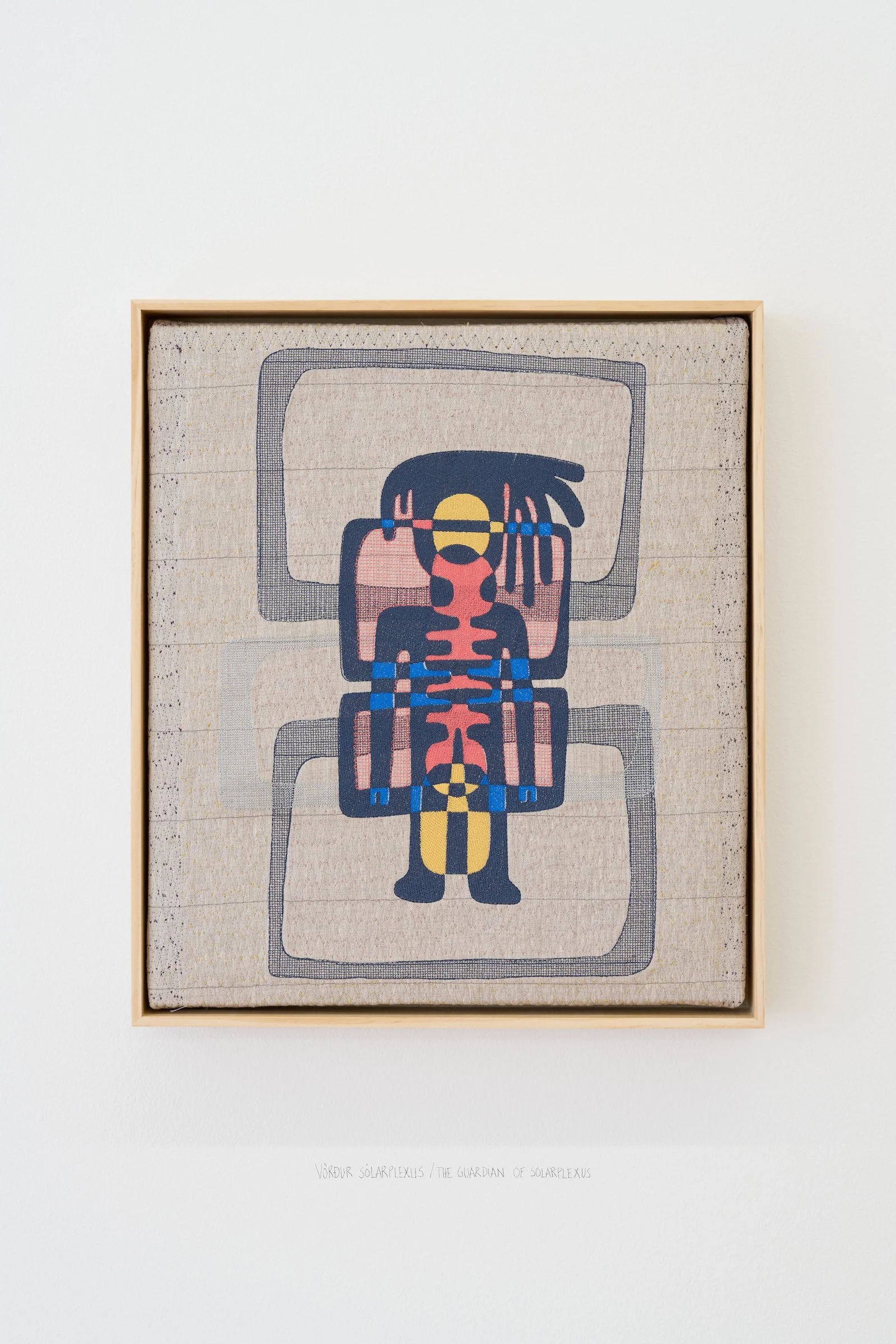
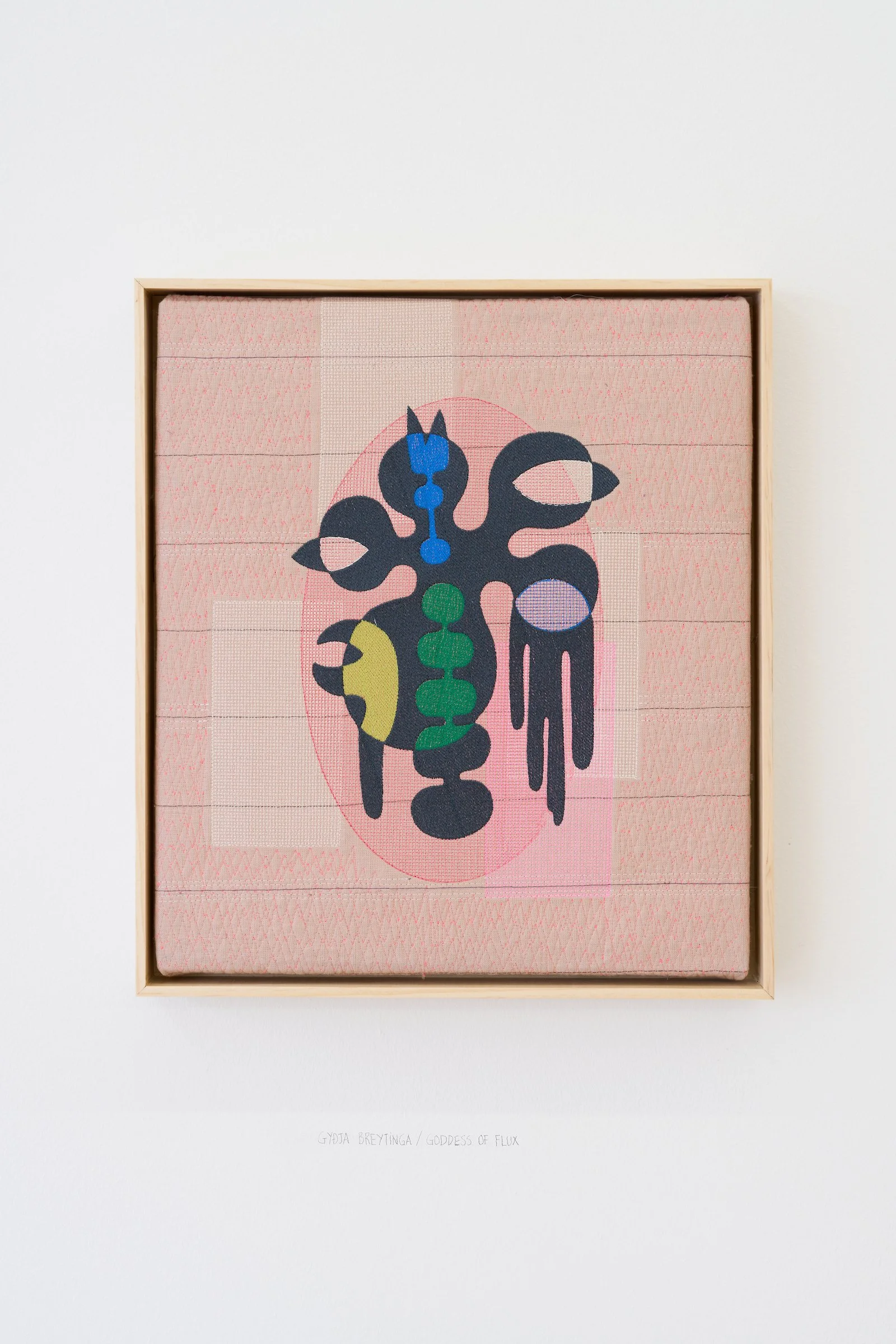
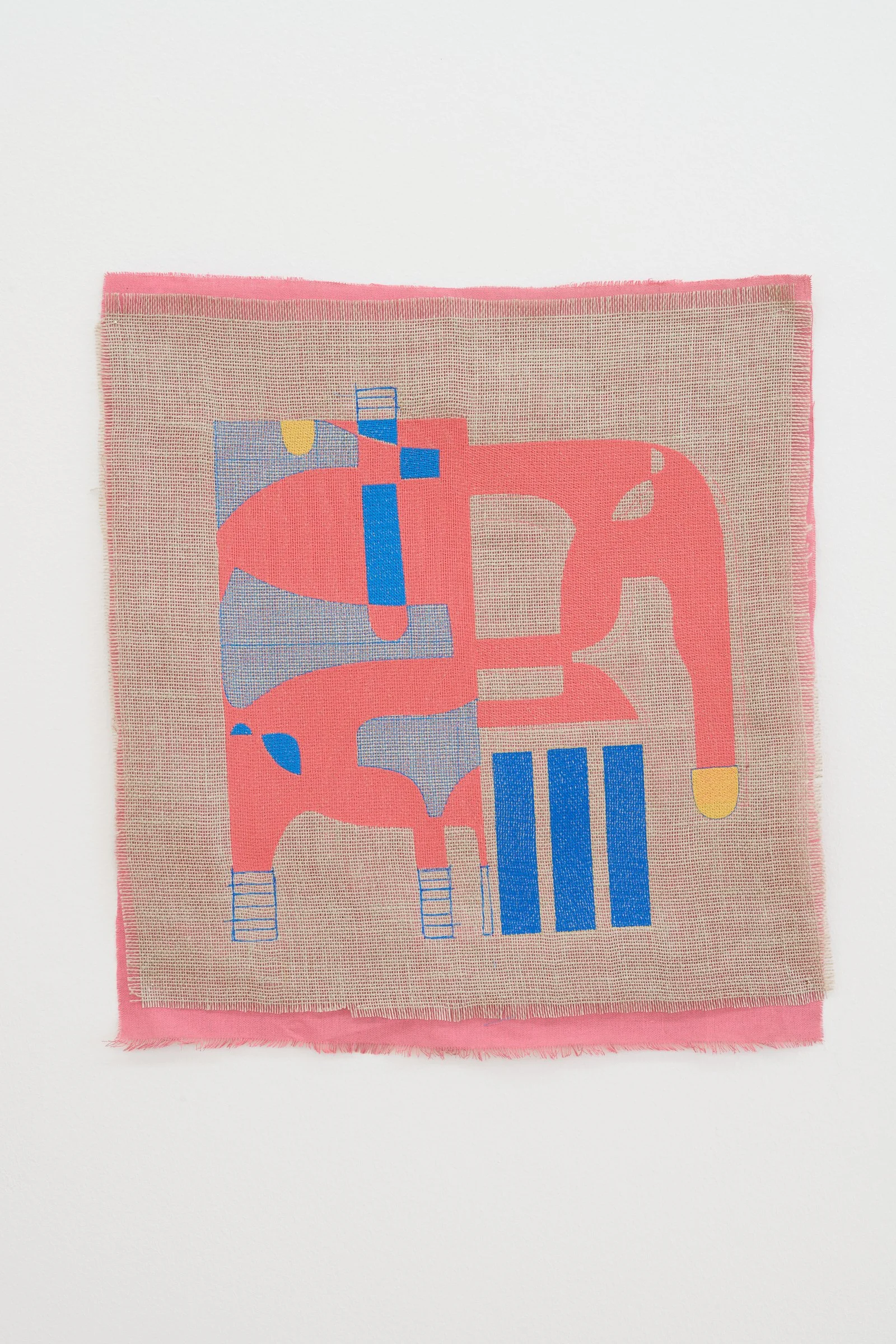
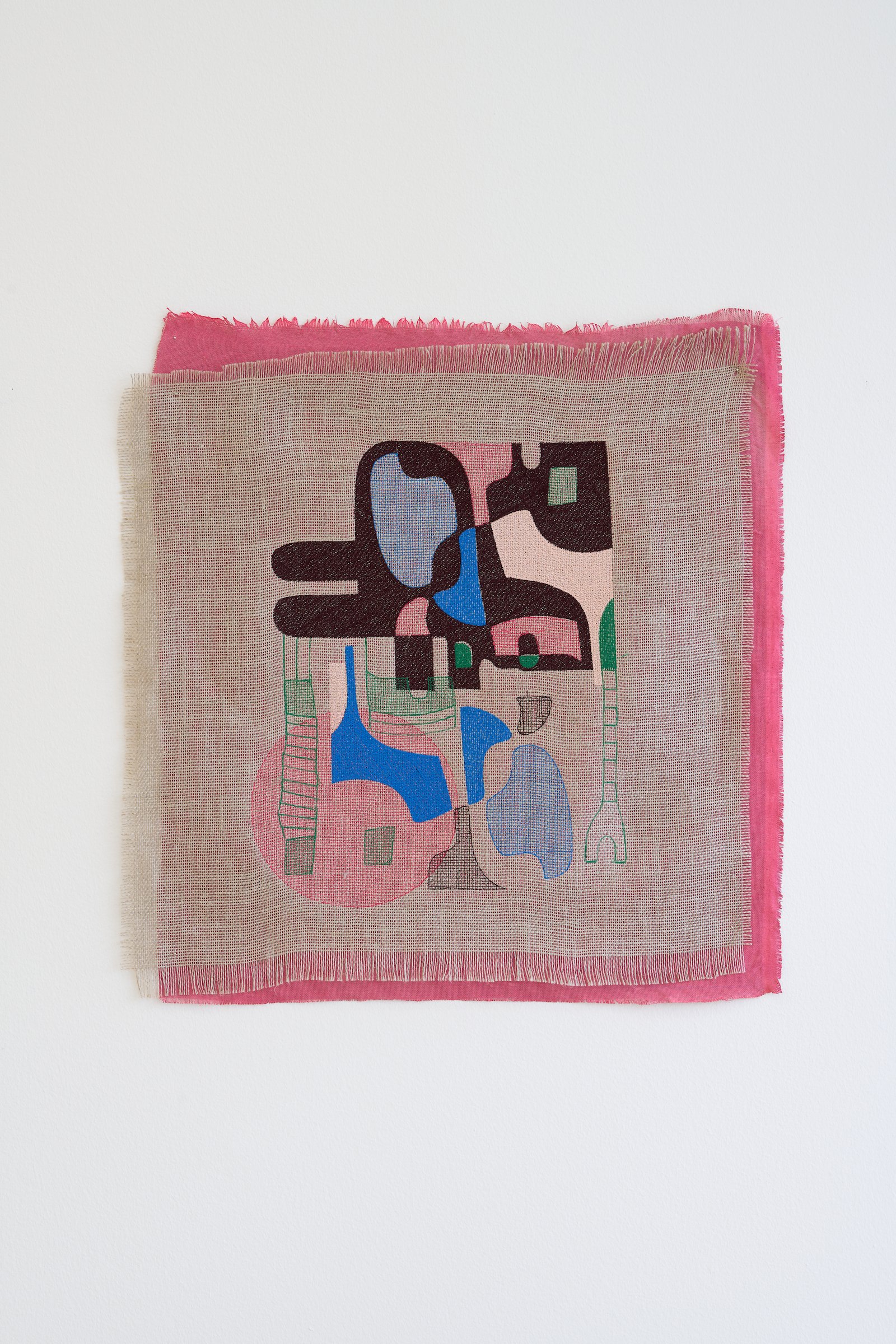
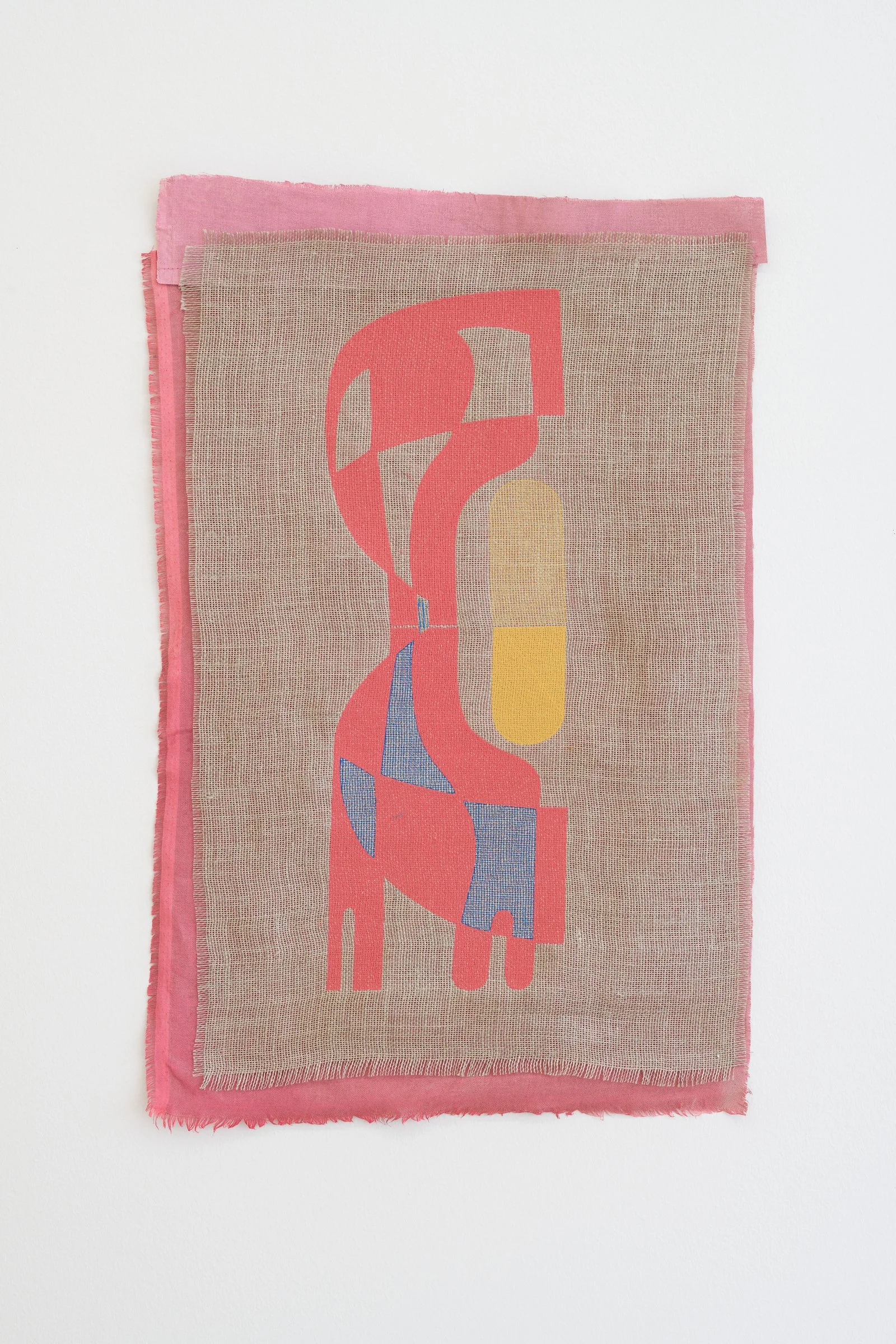
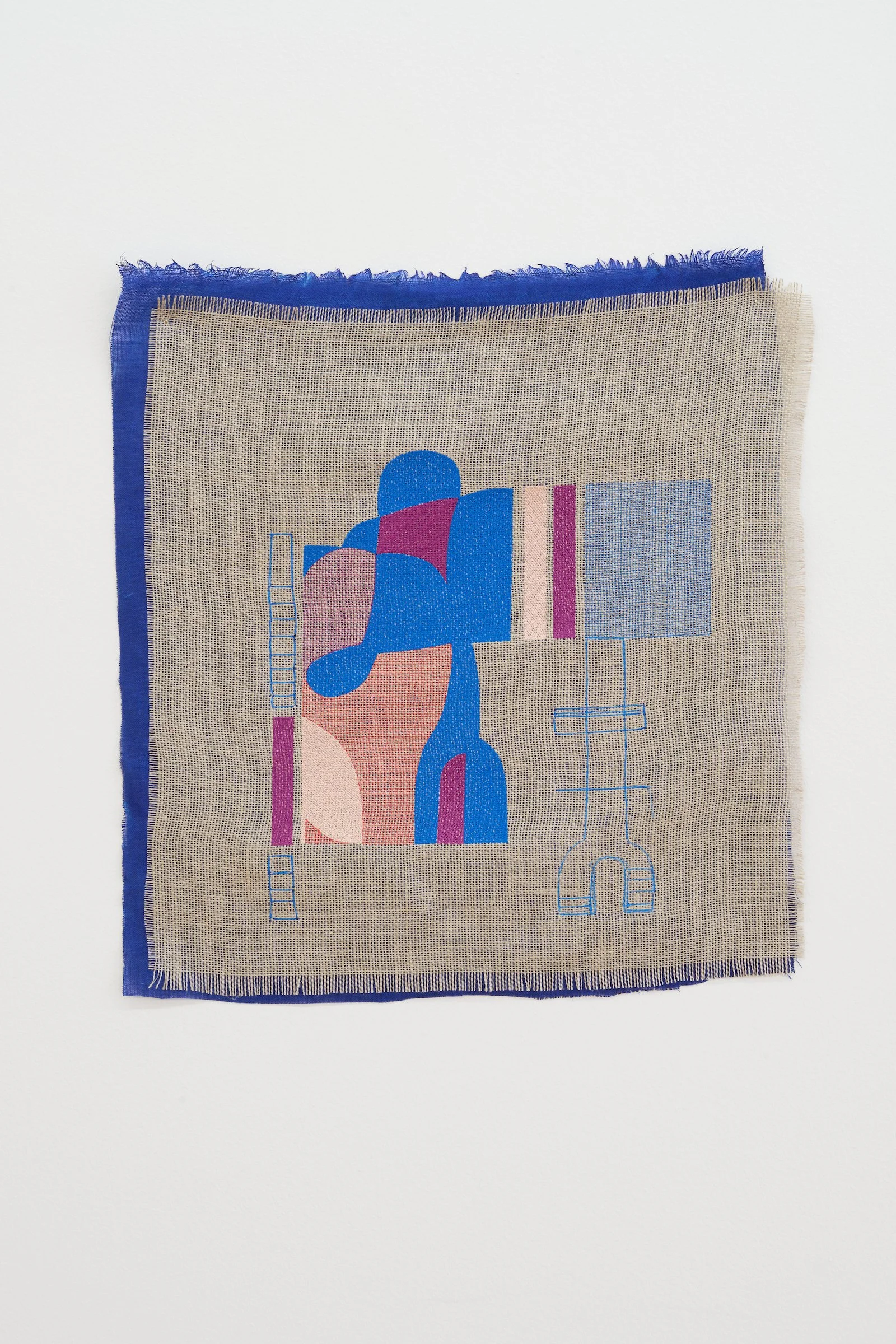
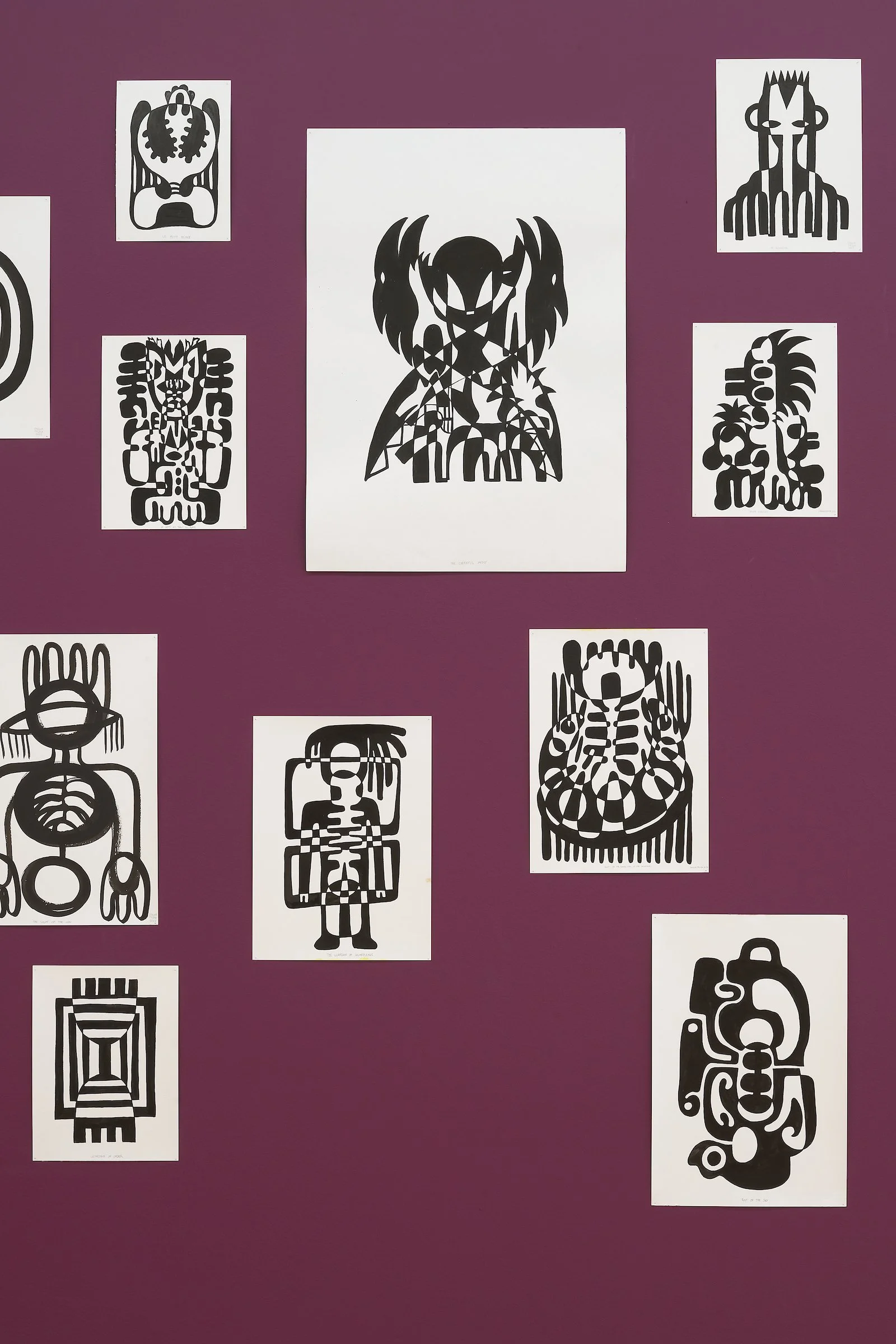
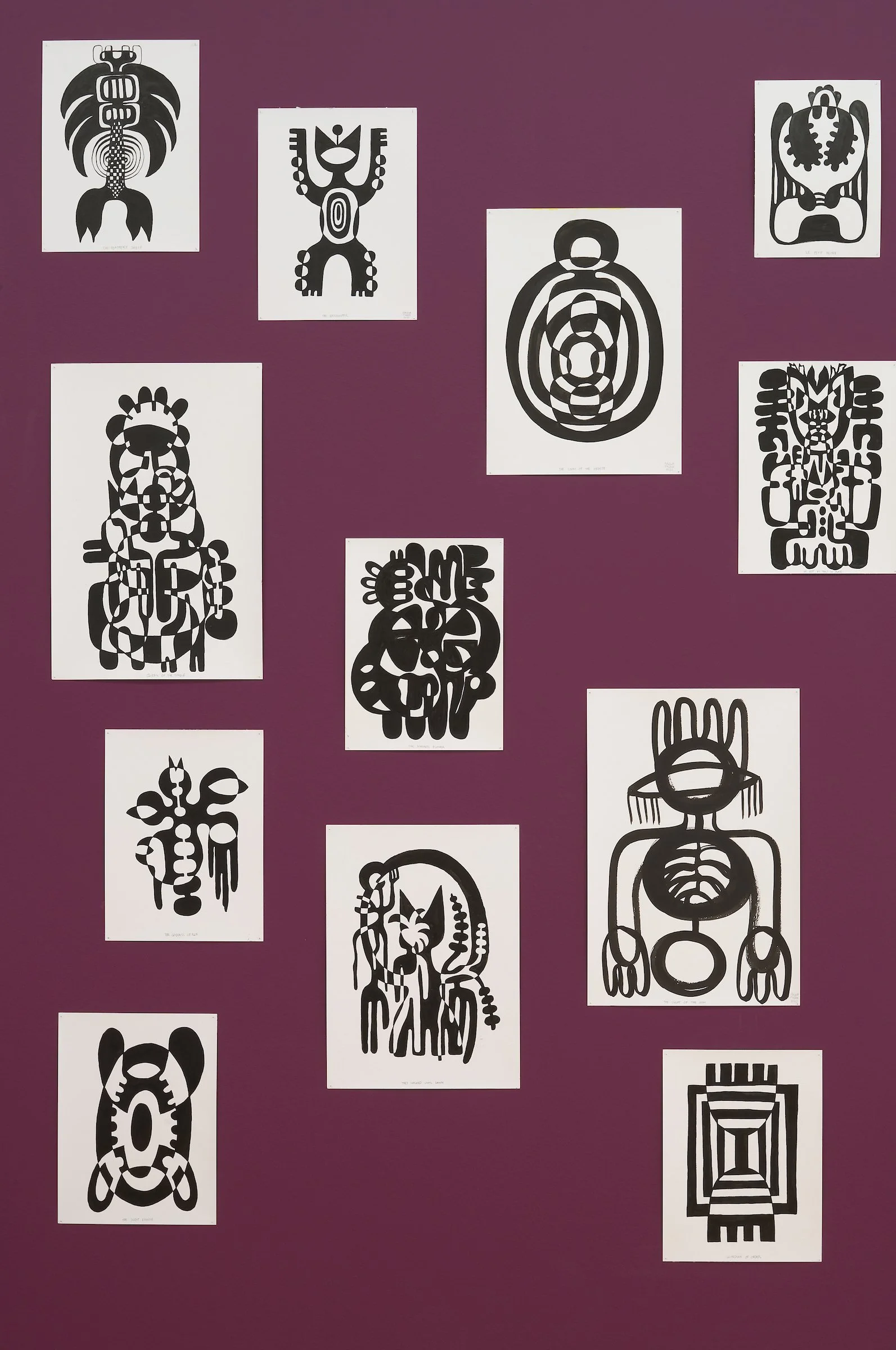
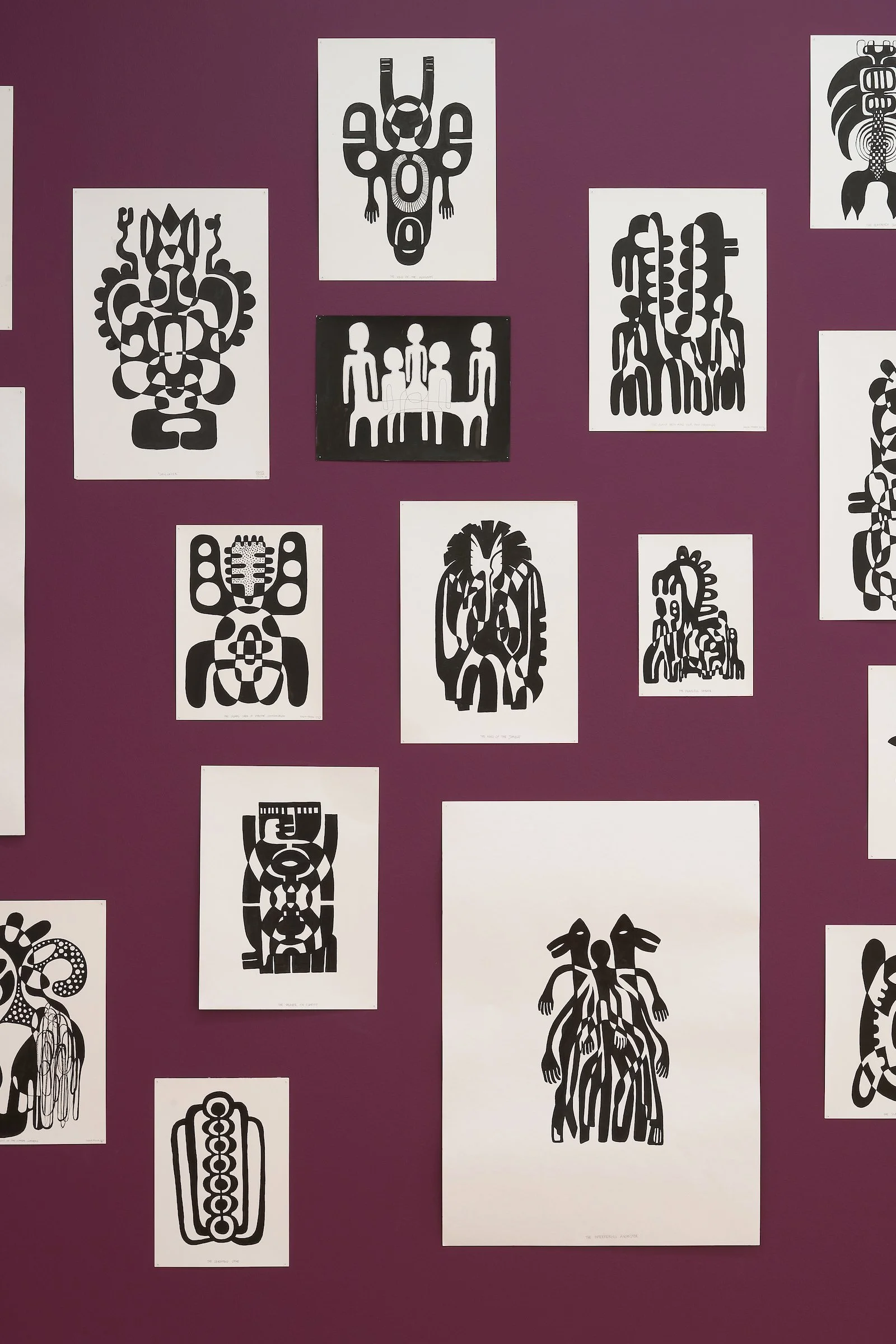
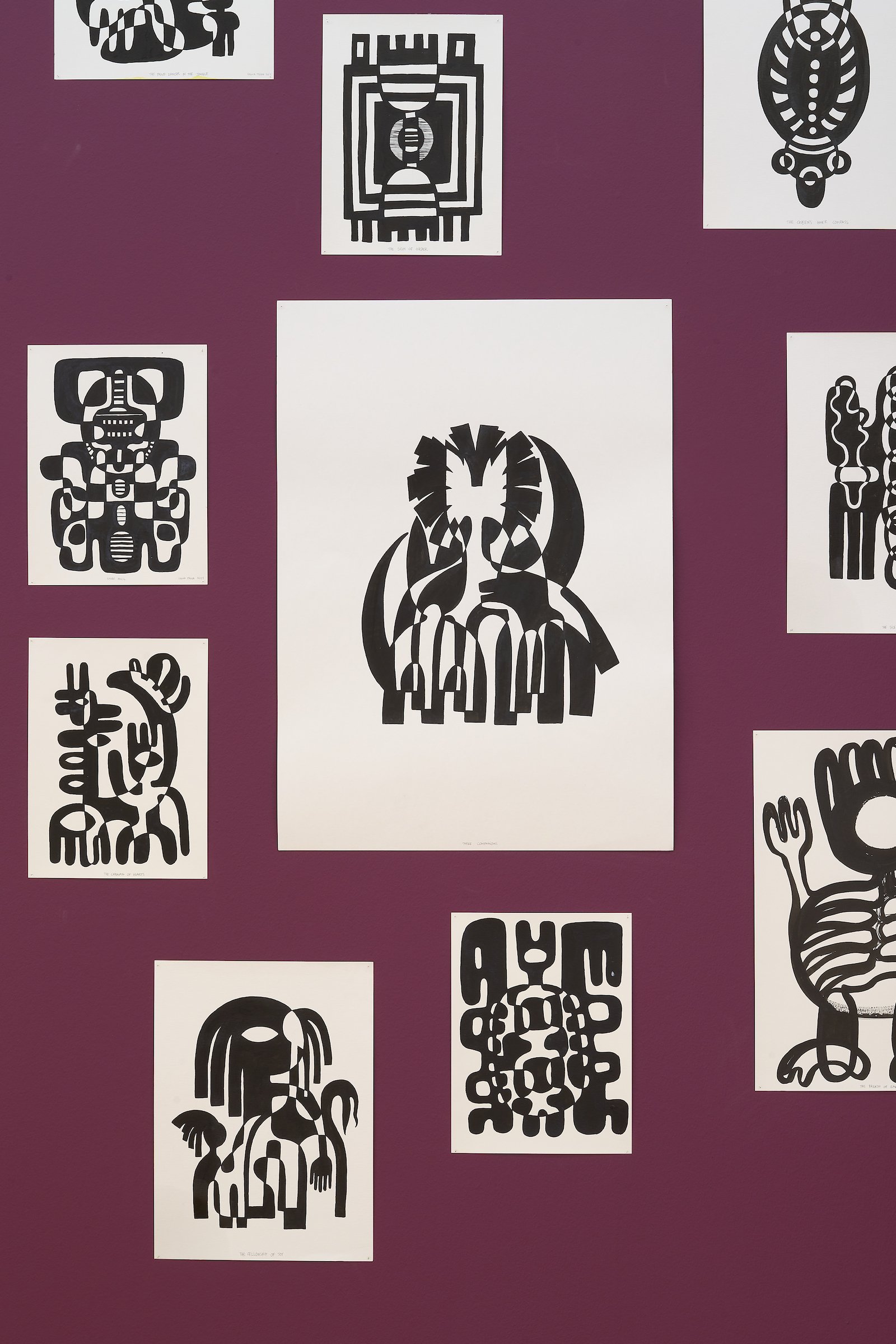
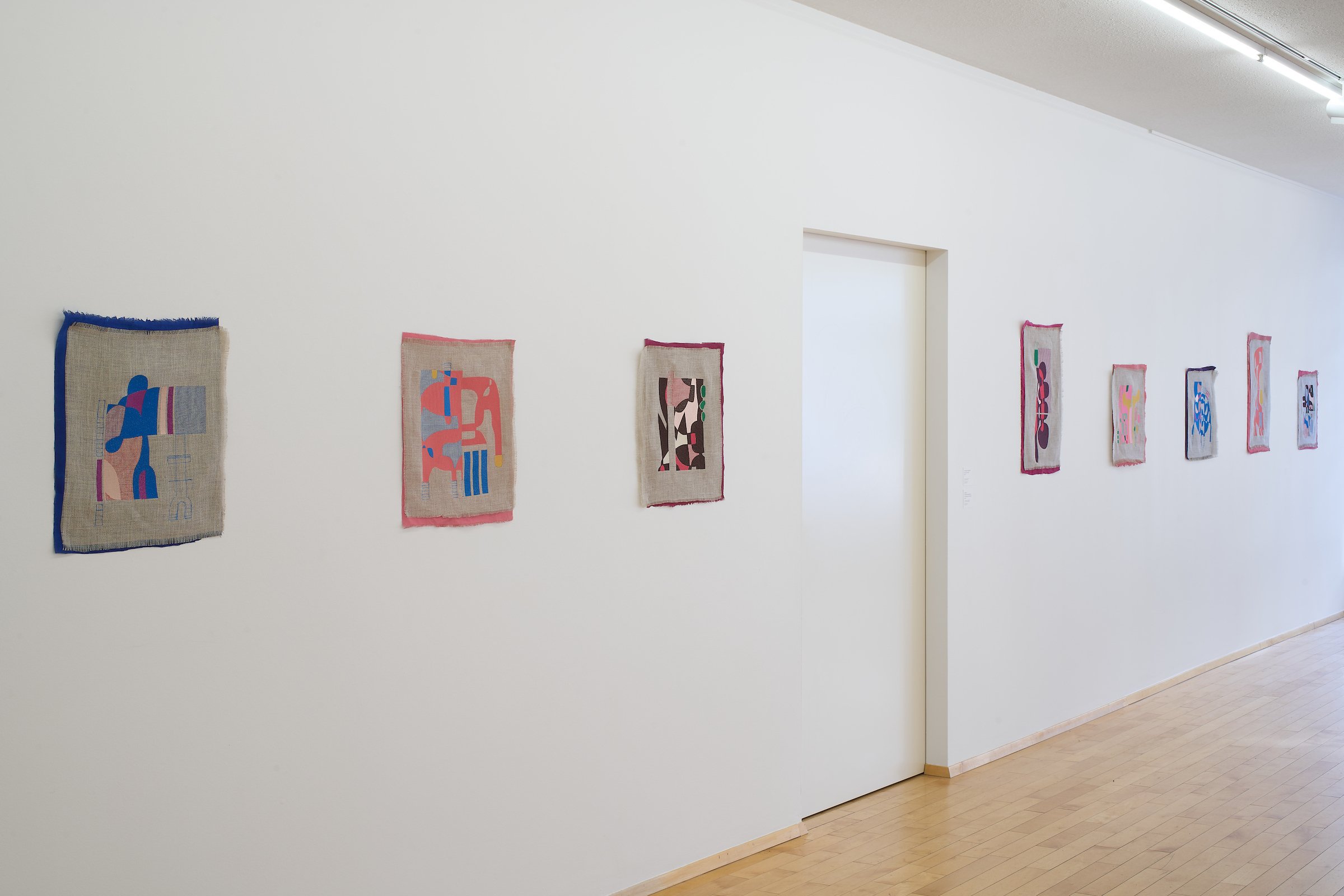
In the exhibition Echo, Ragna Fró›a invites us into an alluring world of colours, forms and textures. Her work is grounded in a deep interest in textiles and in the shared human heritage of patterns and symbols found across the world. In her practice, Ragna interweaves threads from the history of textiles with her own personal universe, characterised by creative joy, experimentation and spiritual curiosity.
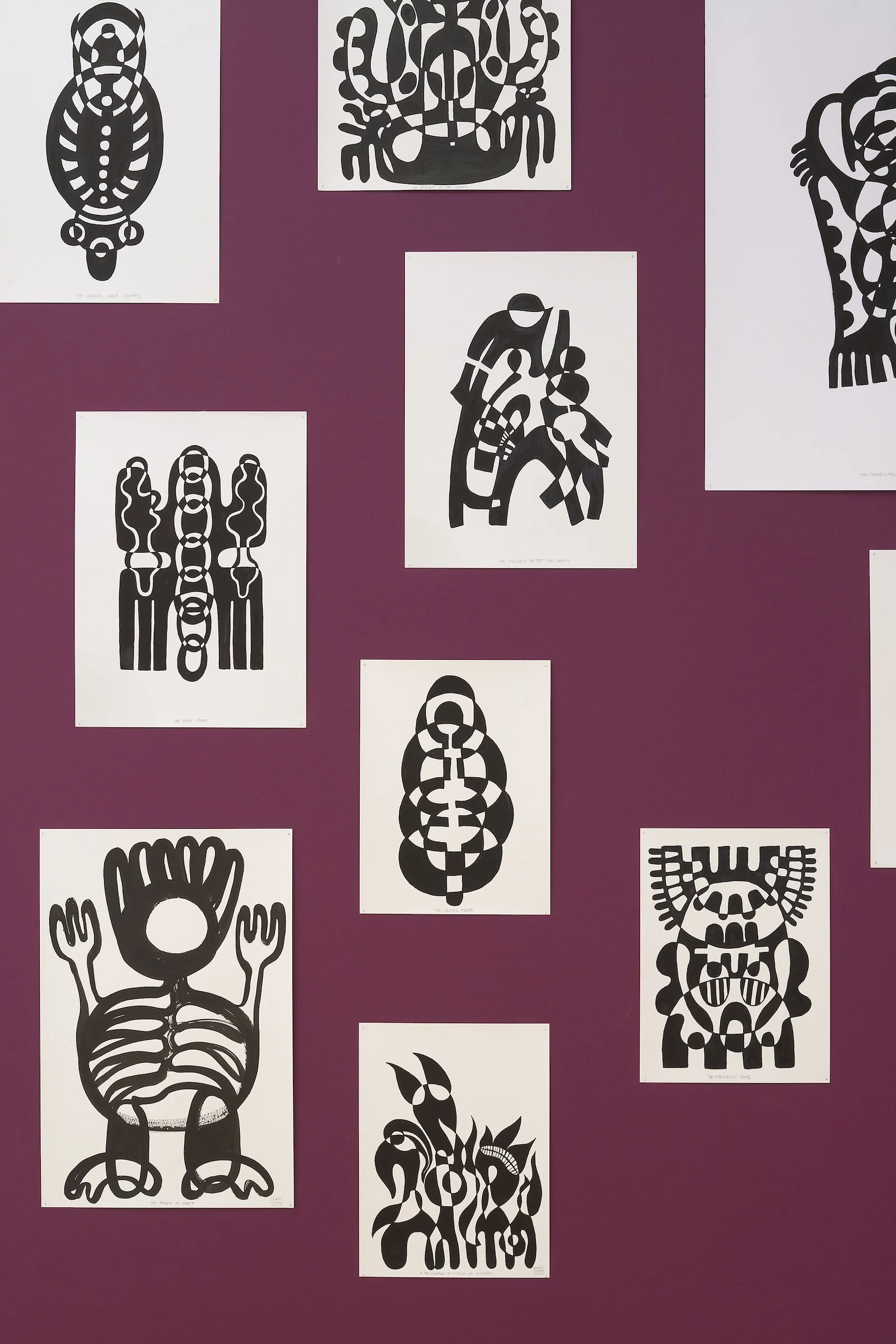
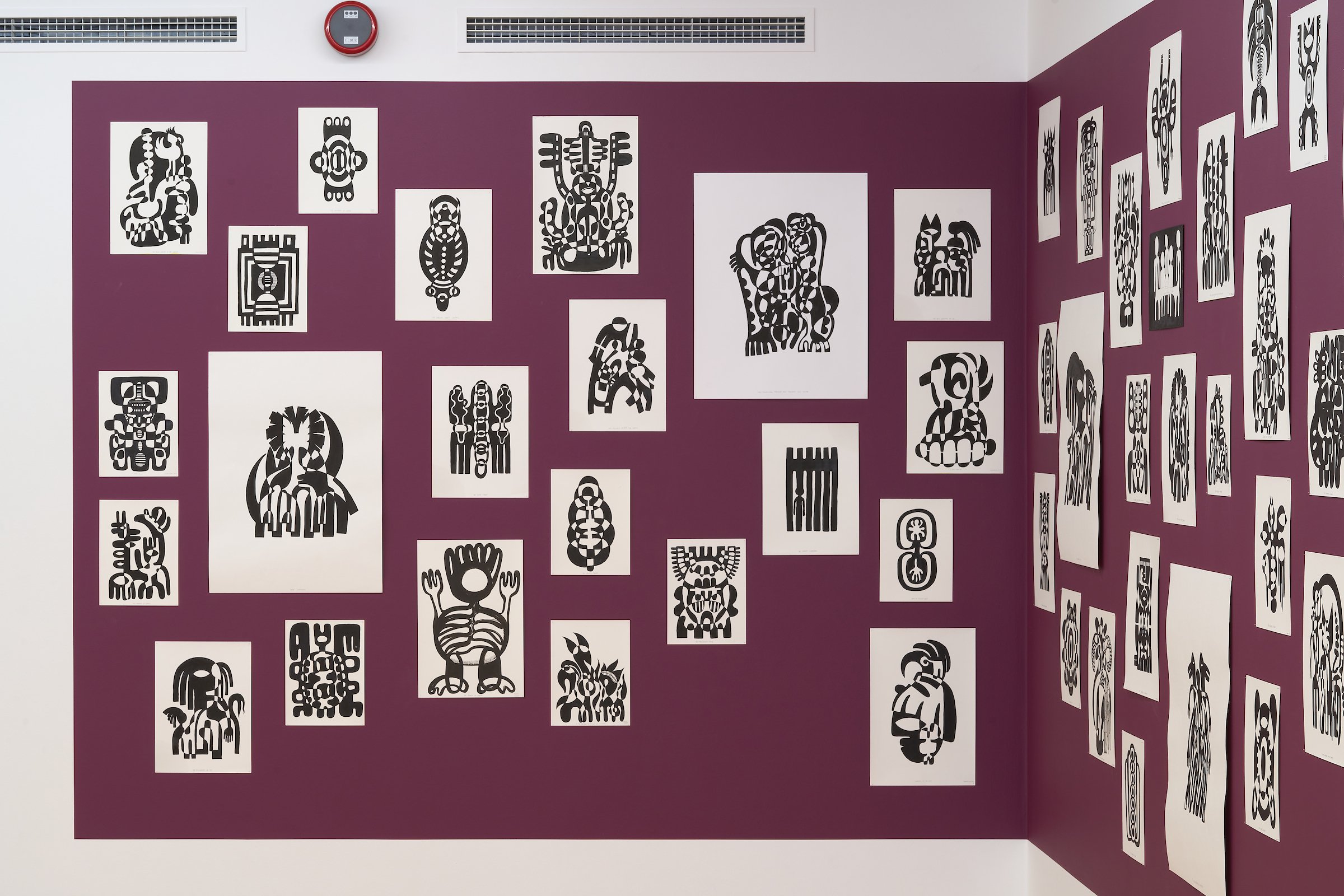
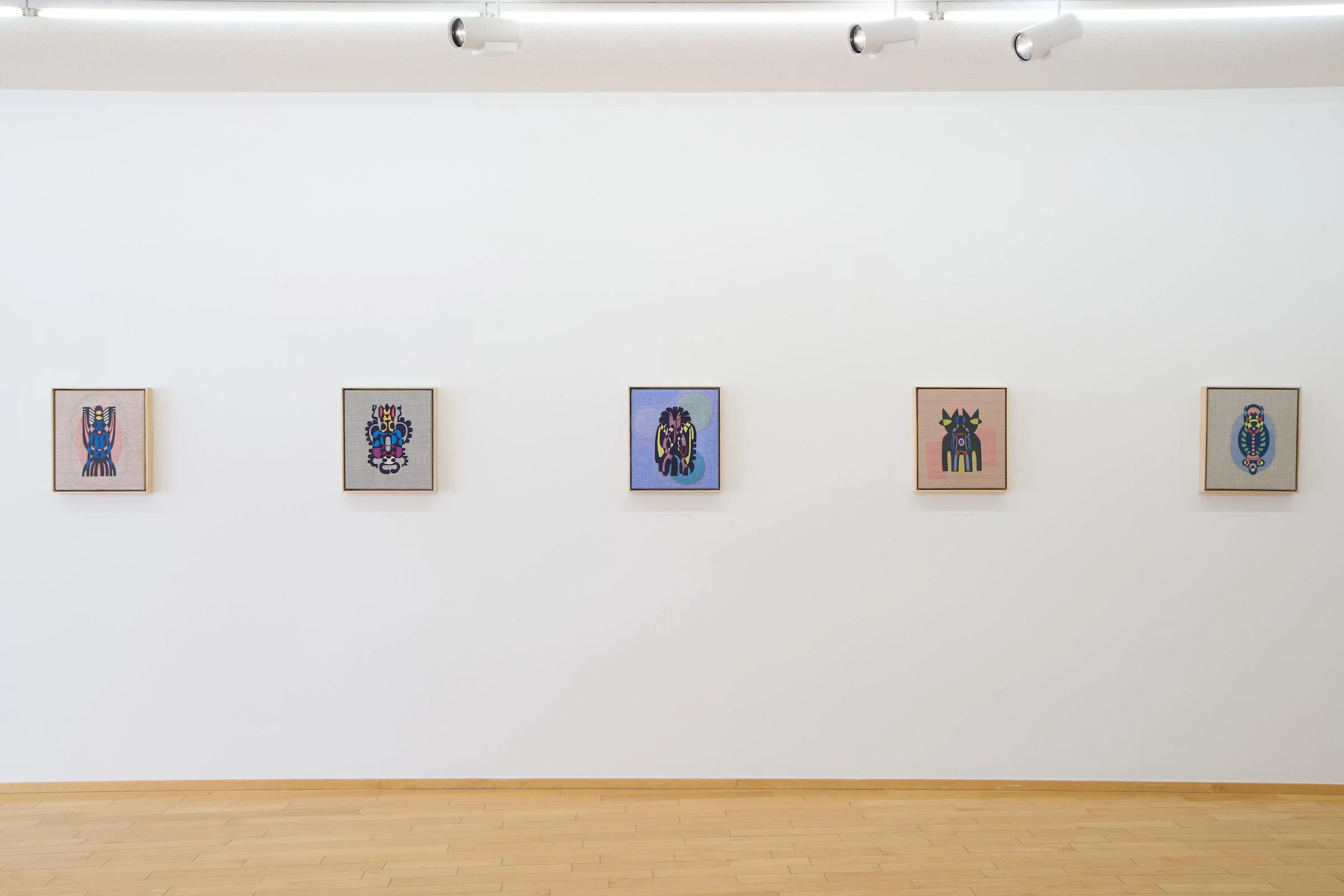
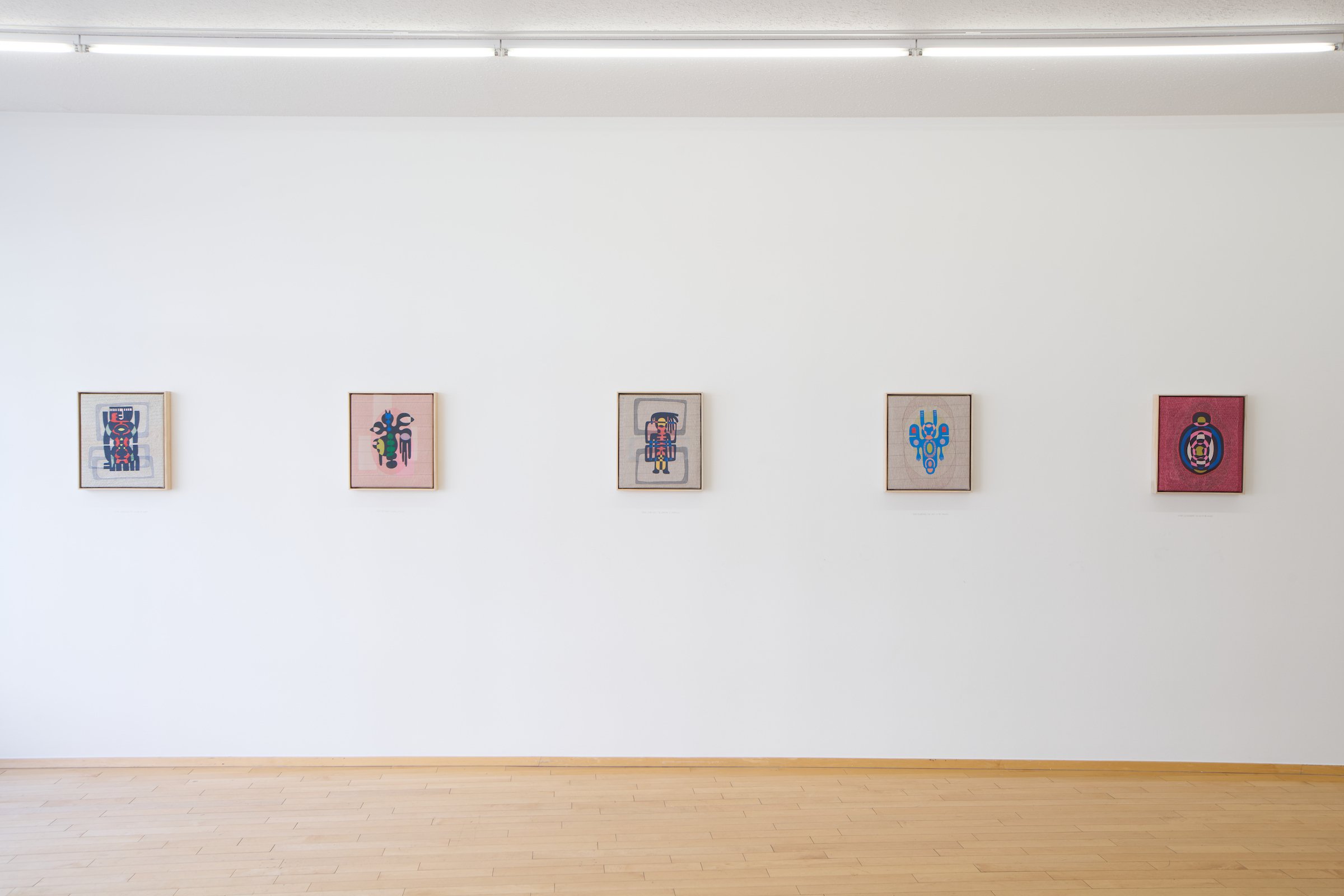
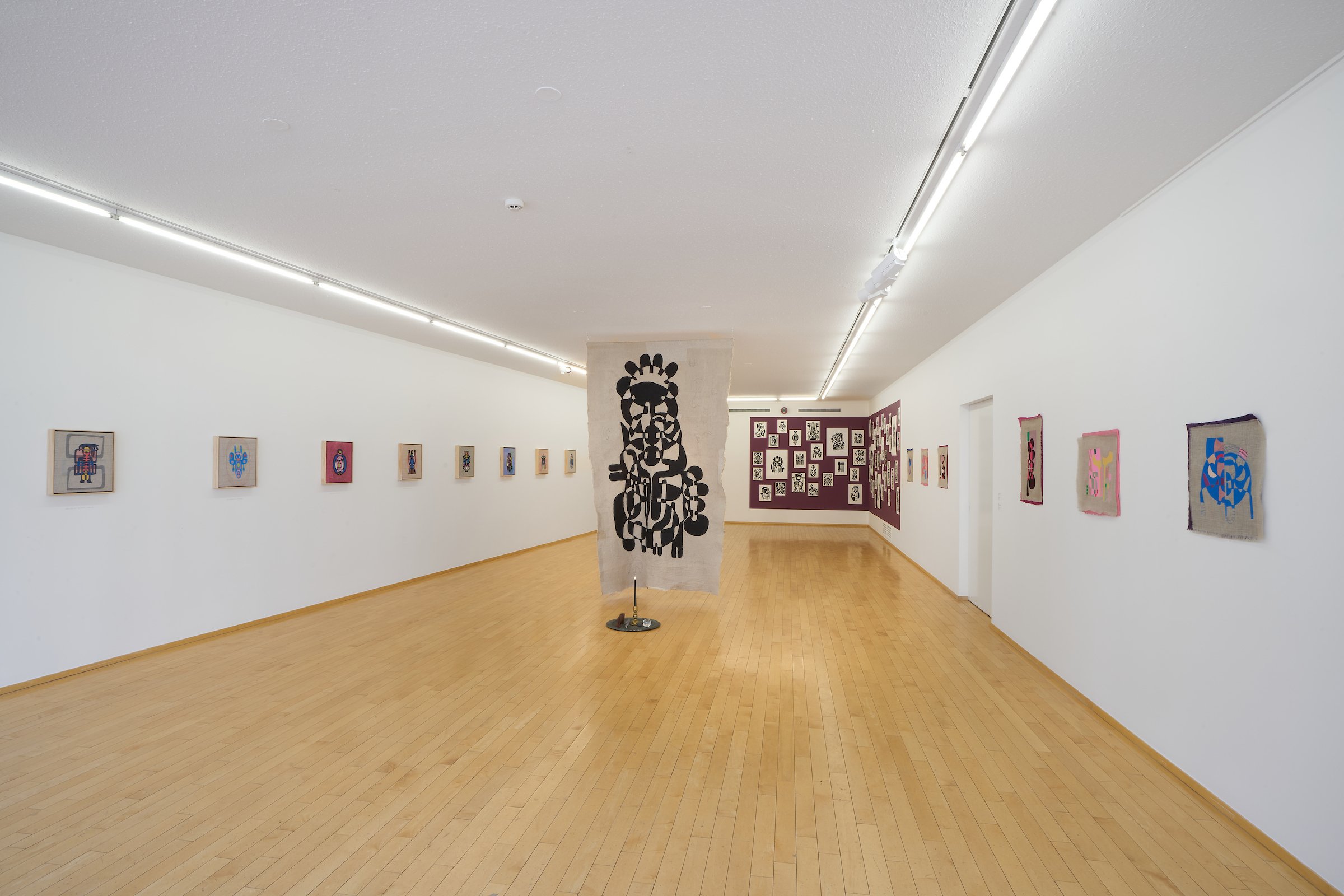
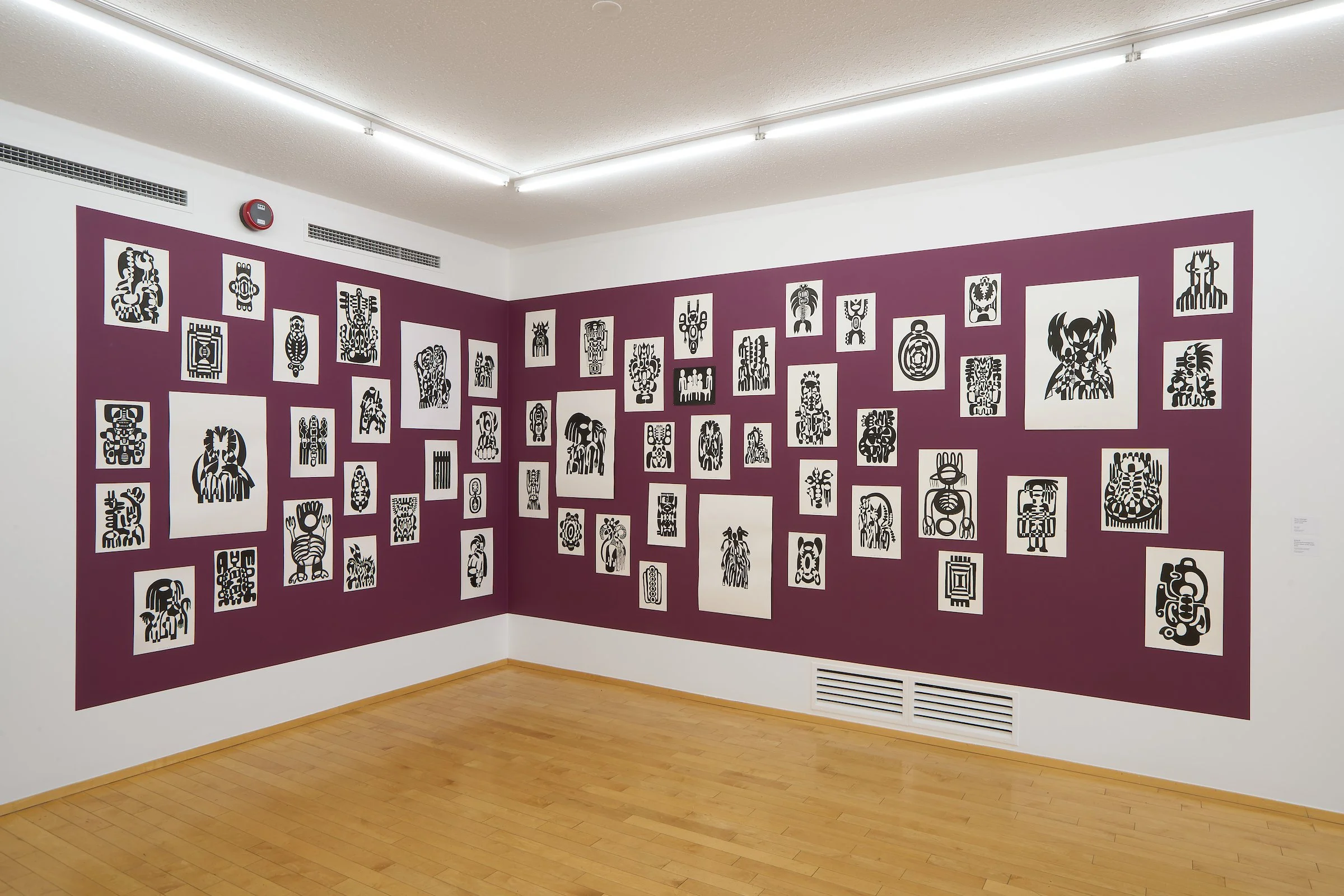
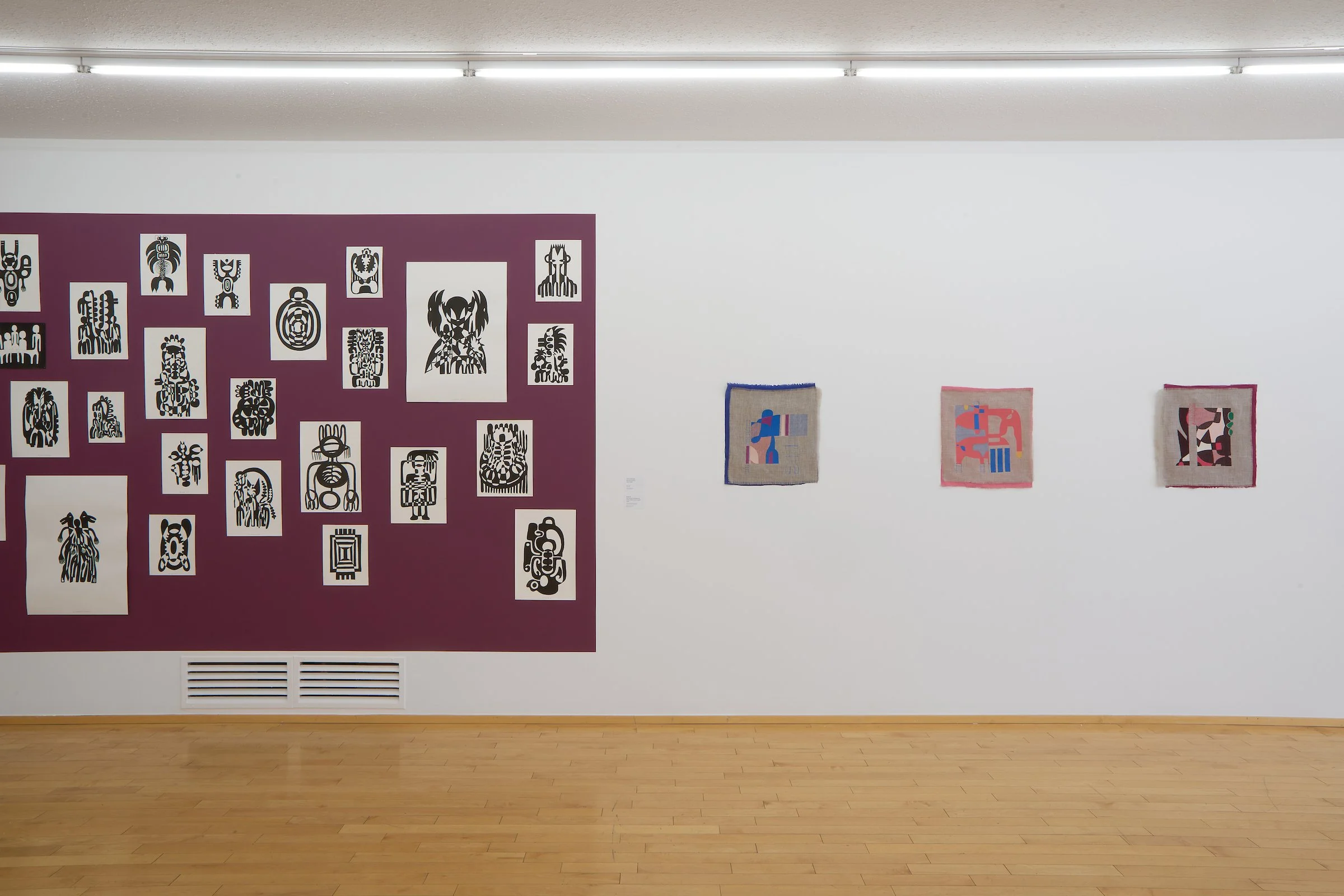
The exhibition includes ink drawings and textile works executed in mixed media. The ink drawings are created in a state of flow and in direct dialogue between the hand and the subconscious. Ragna does not predetermine the direction of a work; rather, she enters a meditative state, where she gives into the drawing and permits forms and lines to emerge as if of their own accord. In recent years, the creation of such works has become an increasingly important component of her artistic practice. Drawing is both sustenance and anchor; something she returns to again and again. The result is numerous drawings that not only stand as independent works but also form the foundation for other pieces.
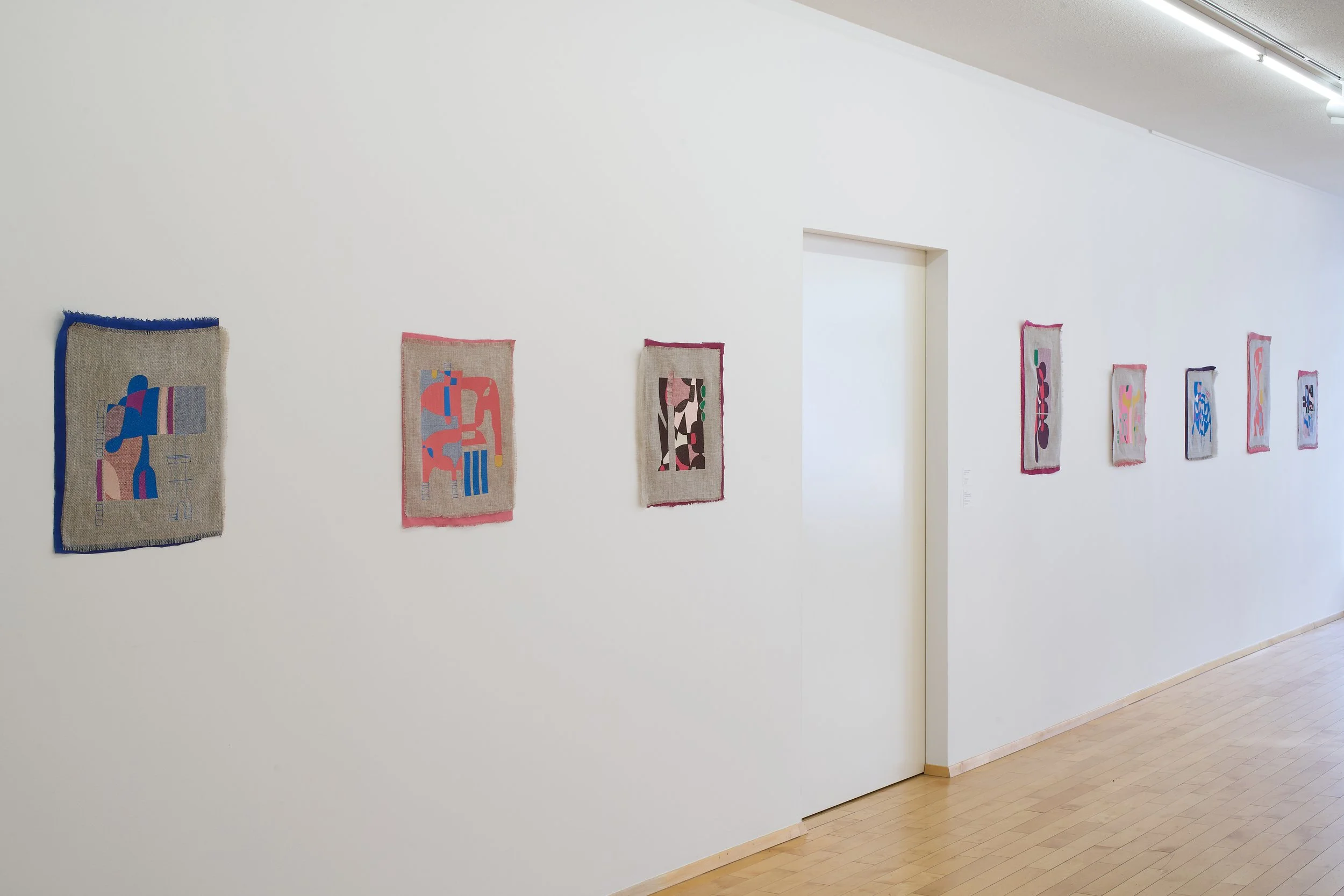
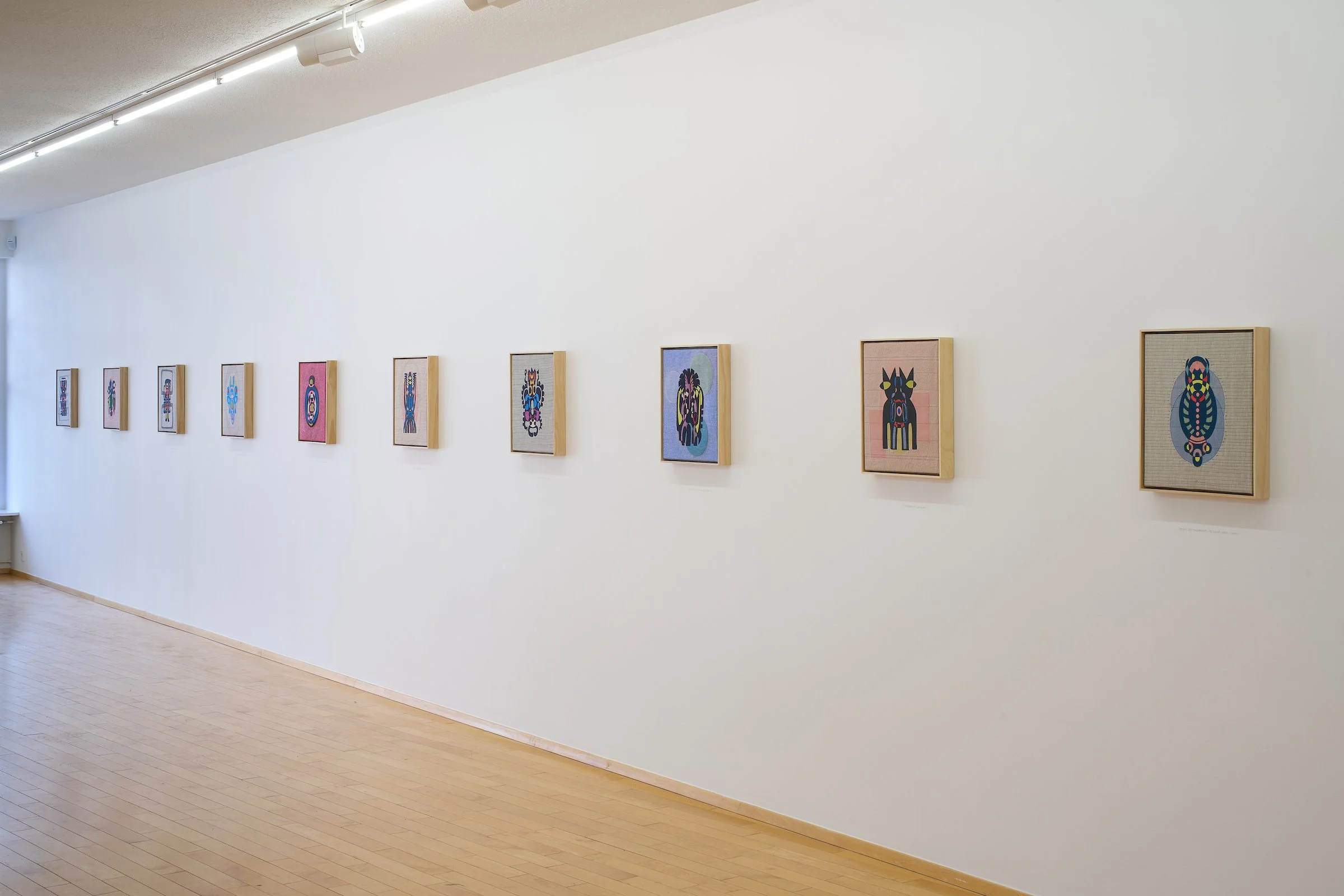
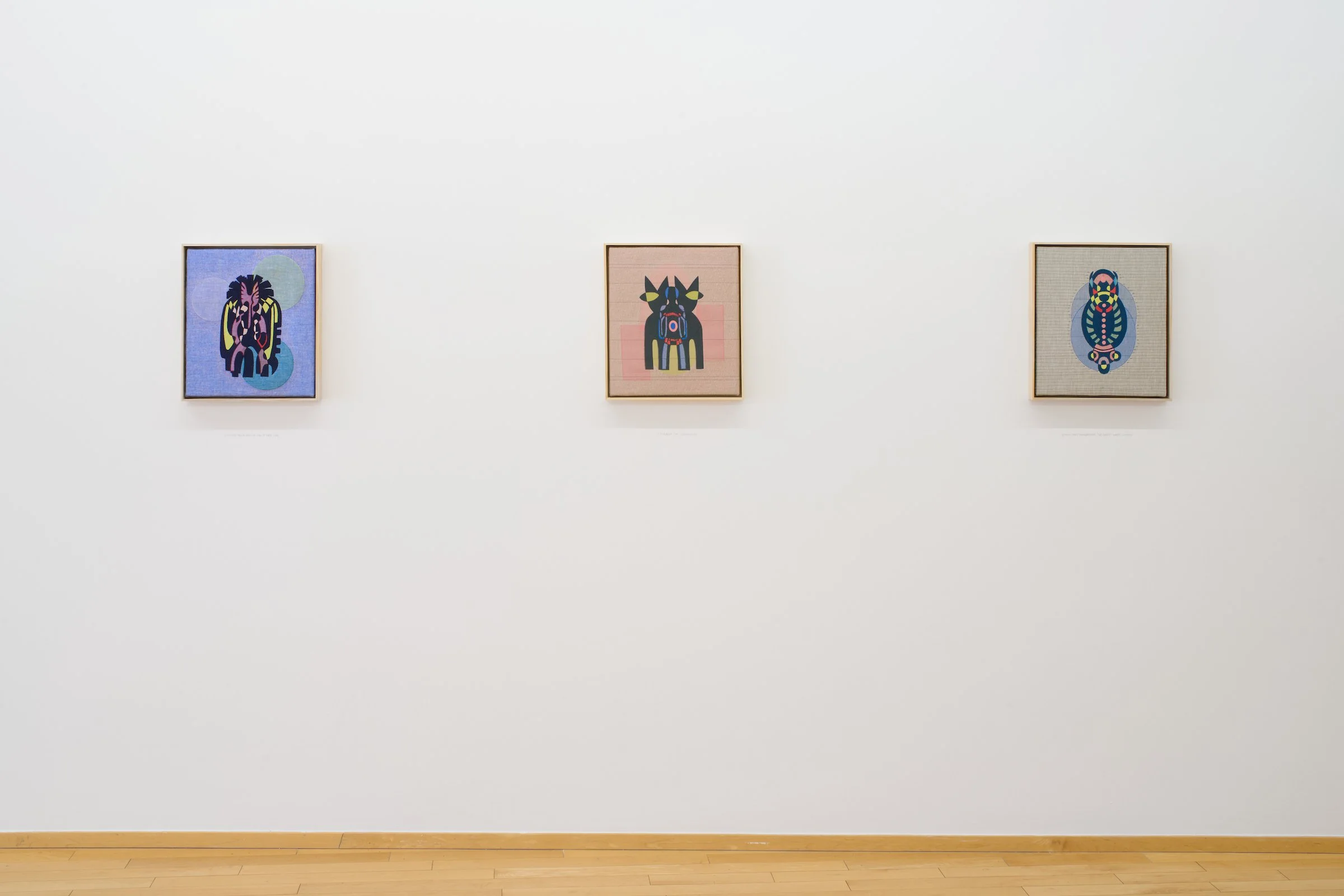
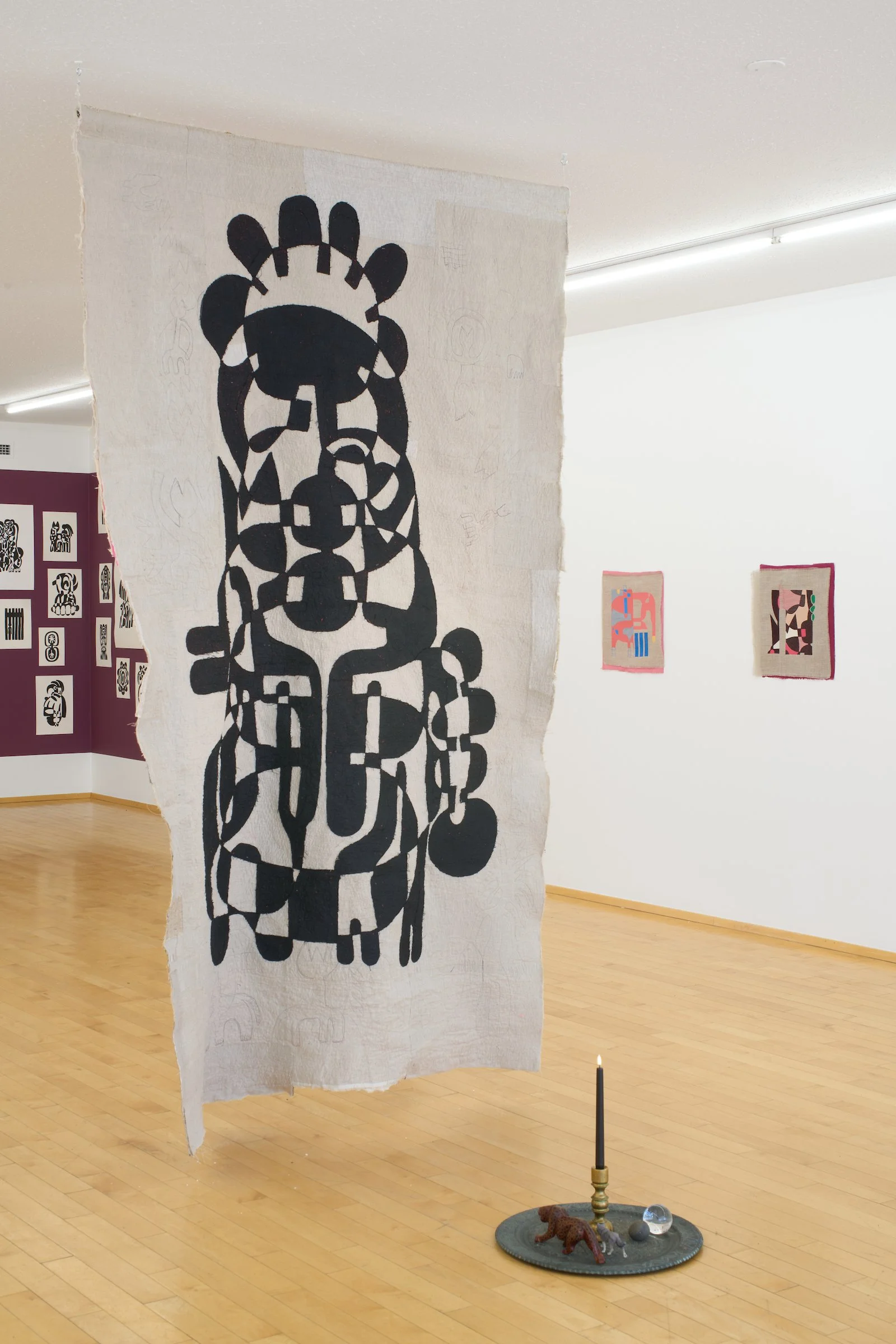
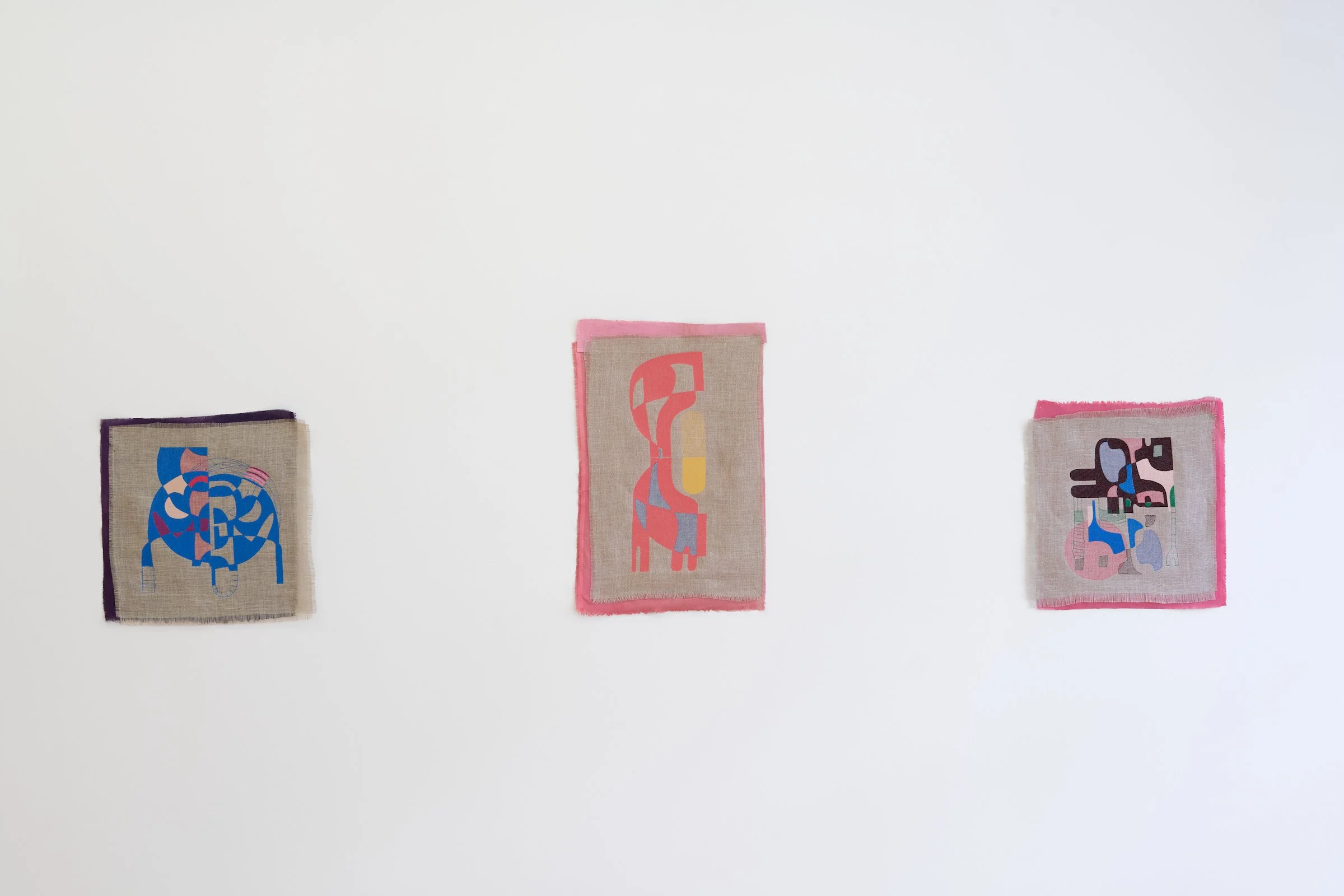
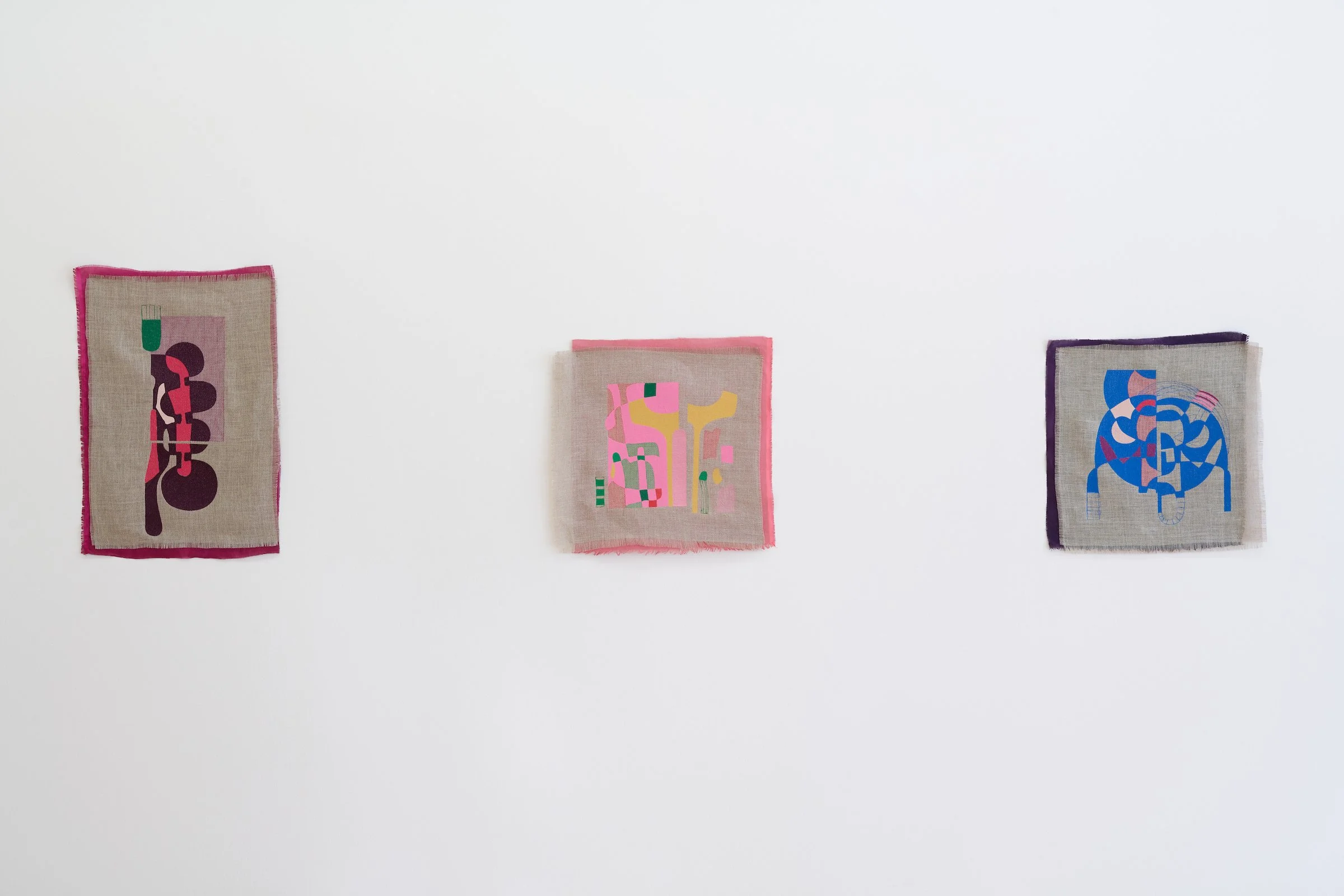
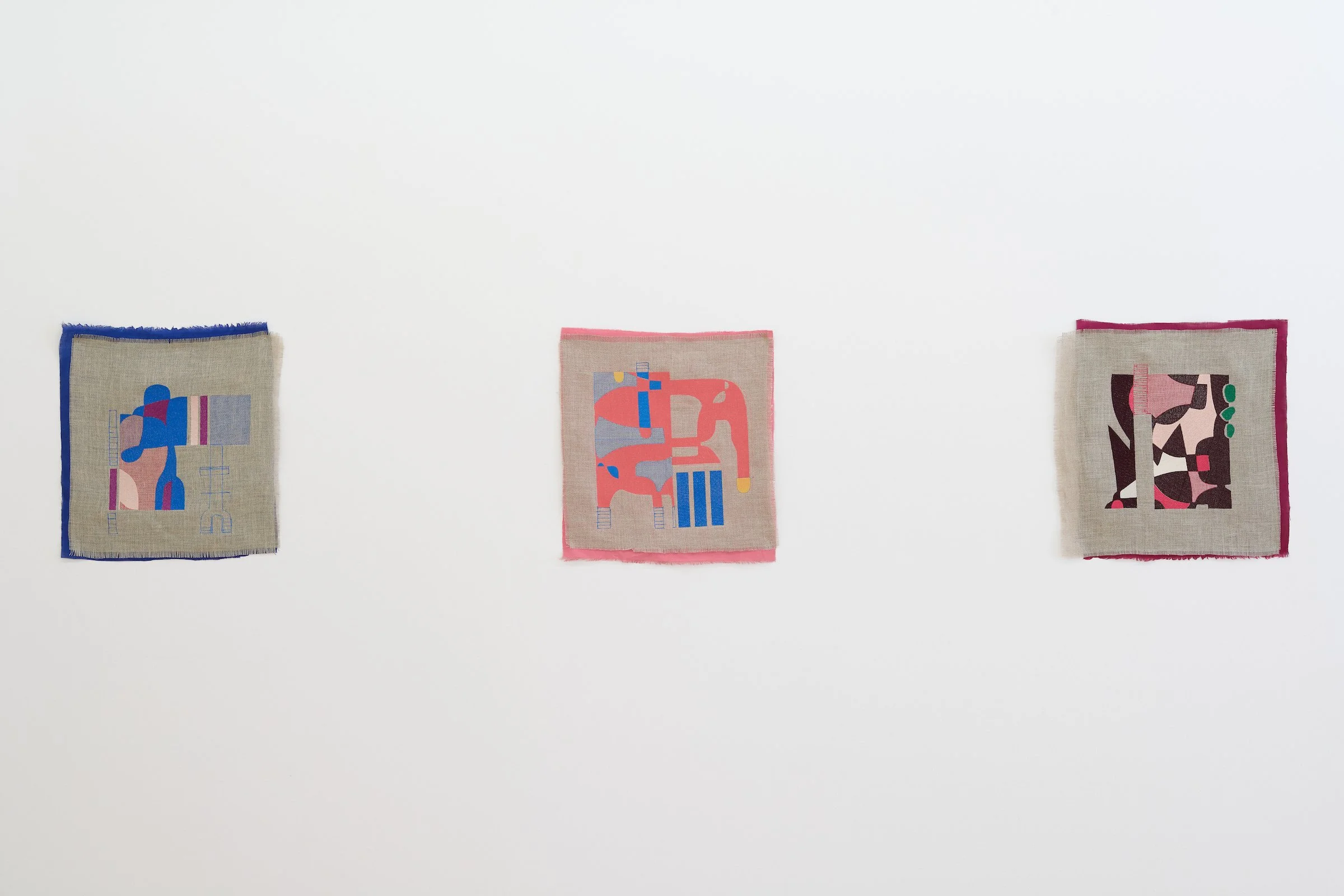
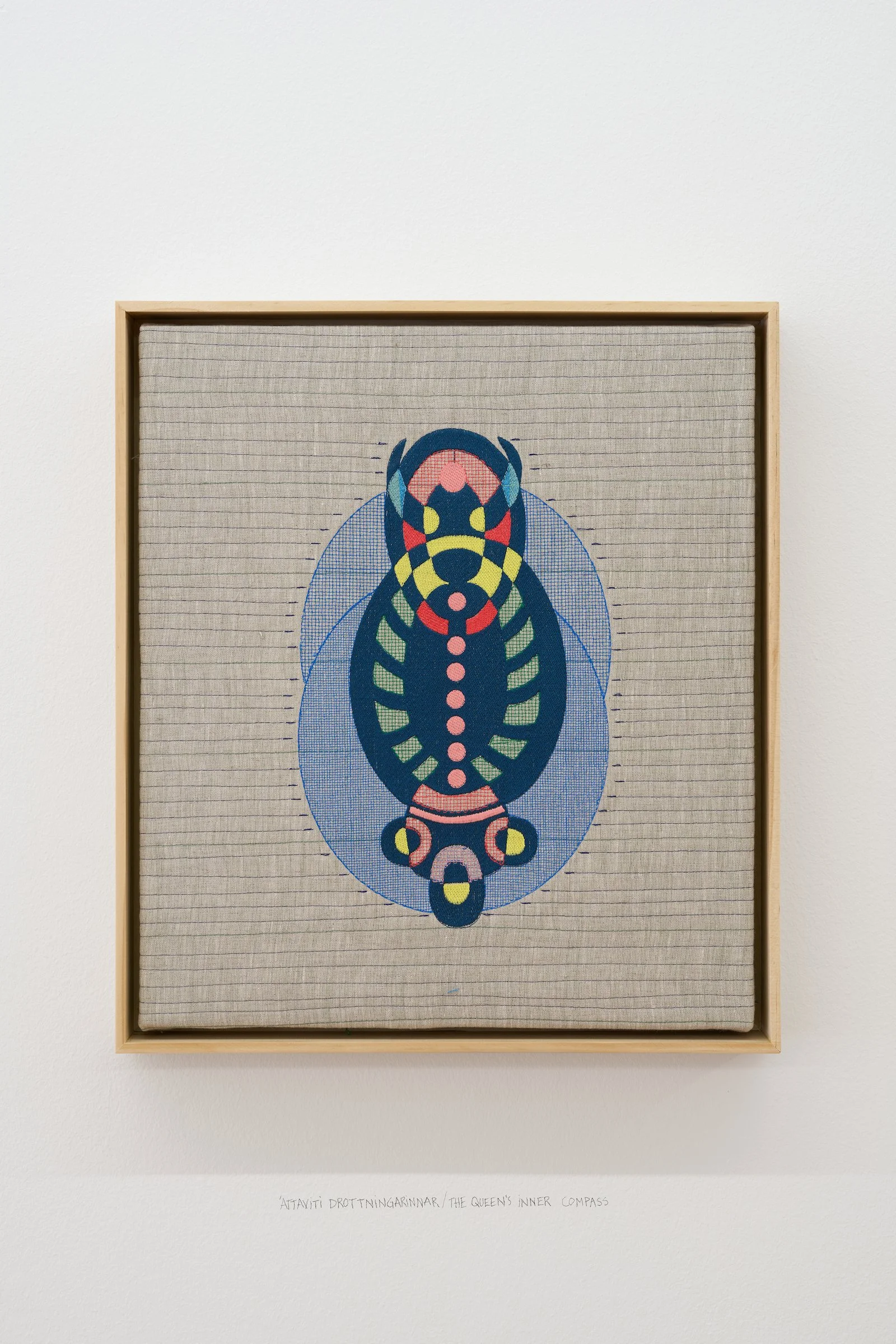
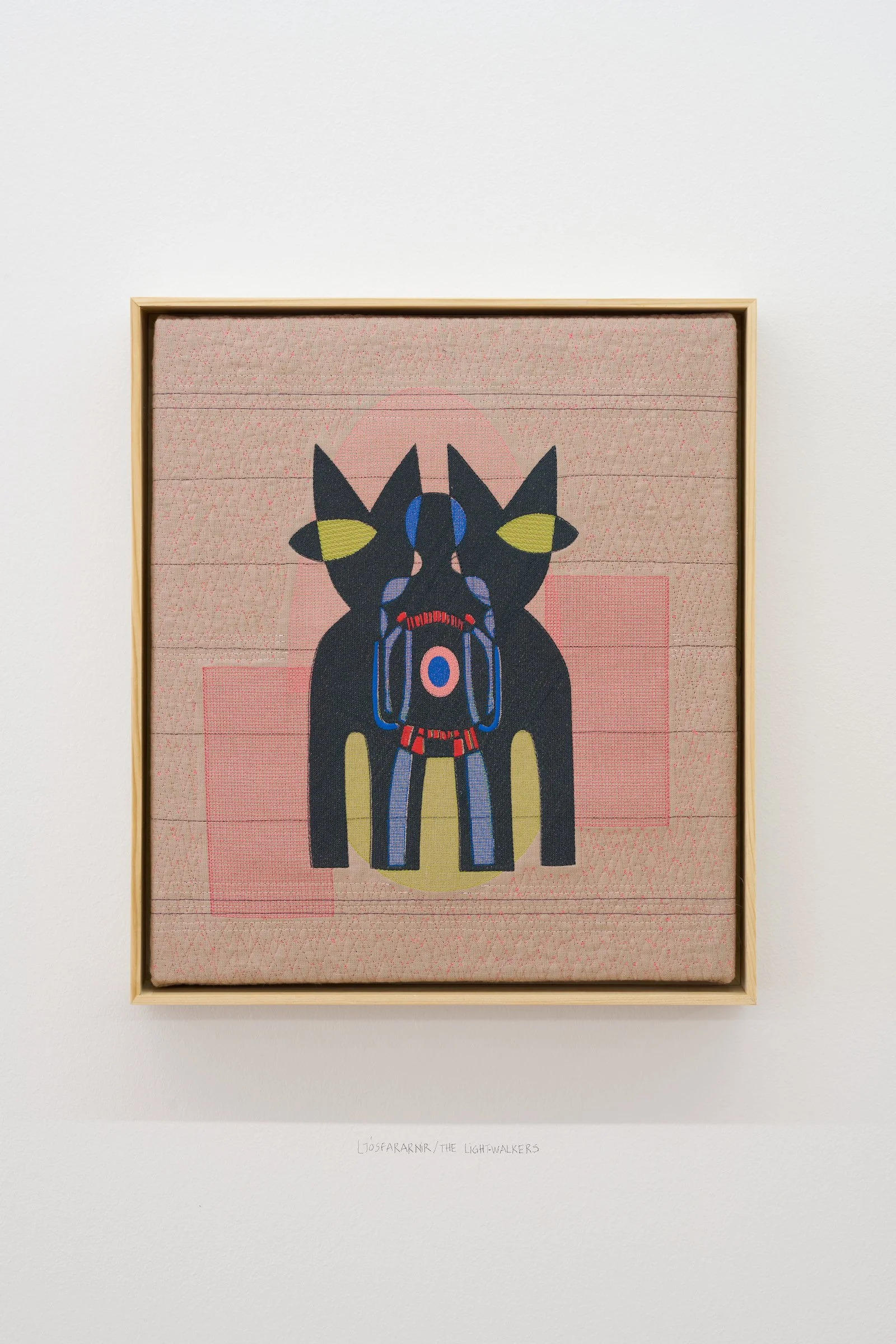
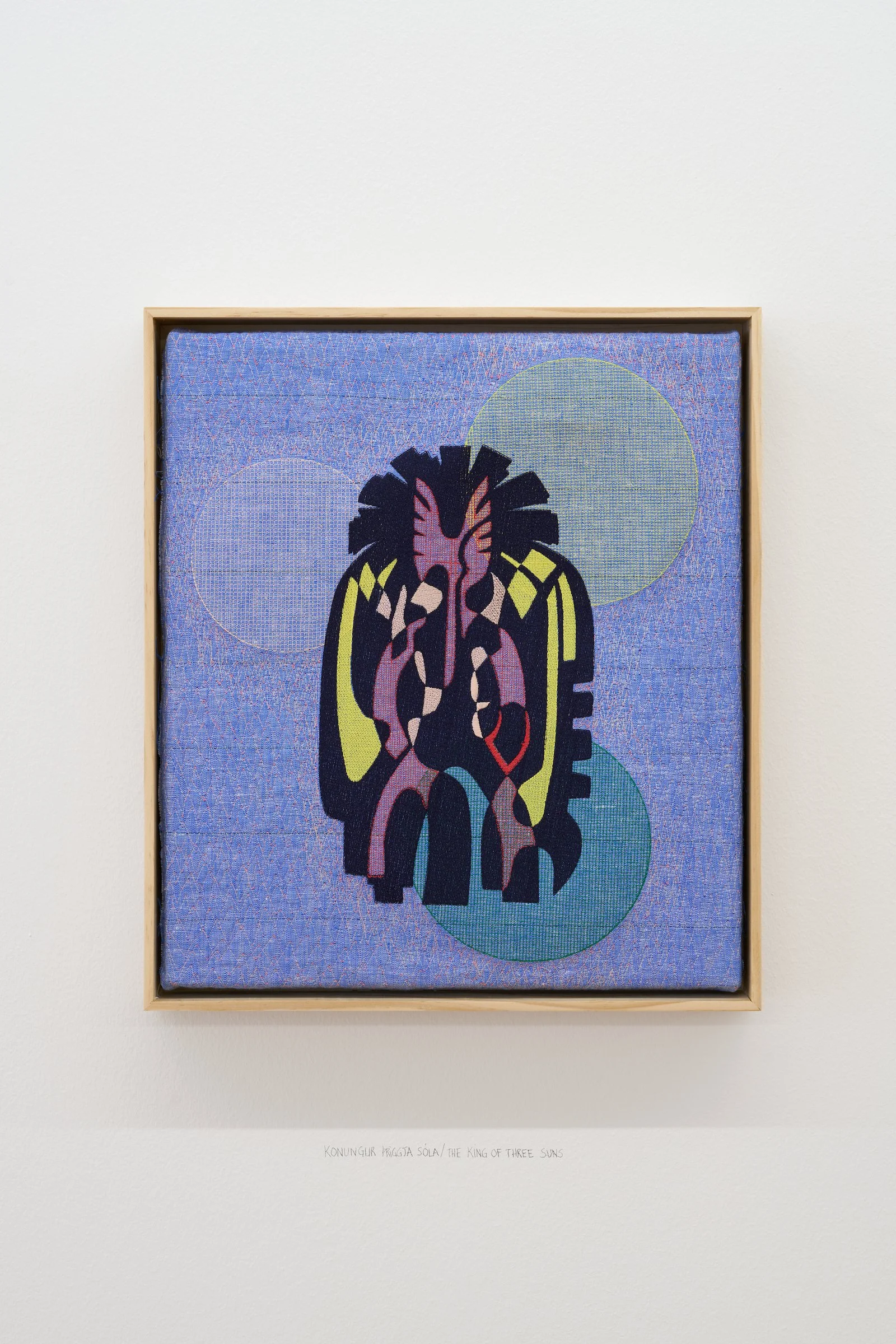
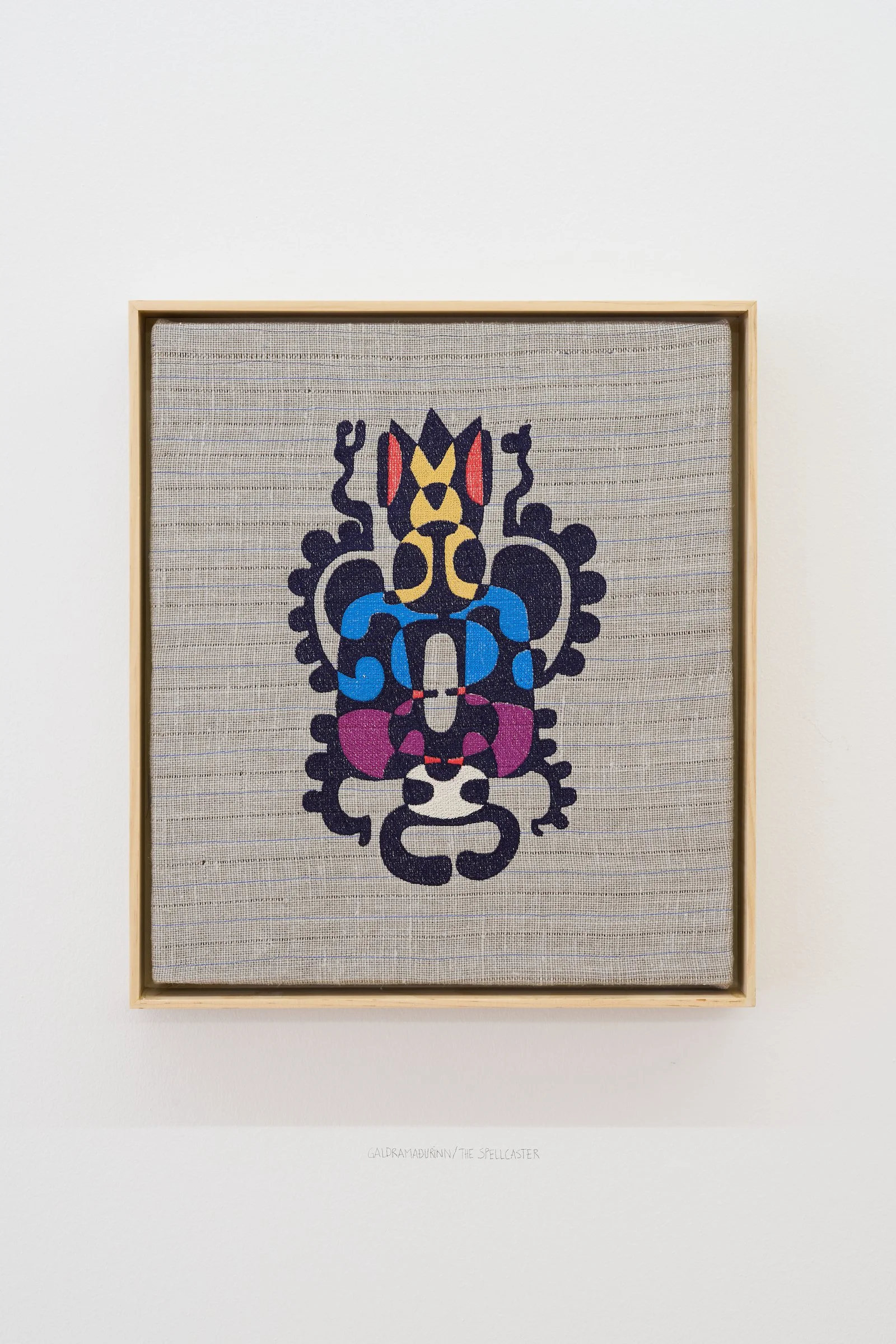
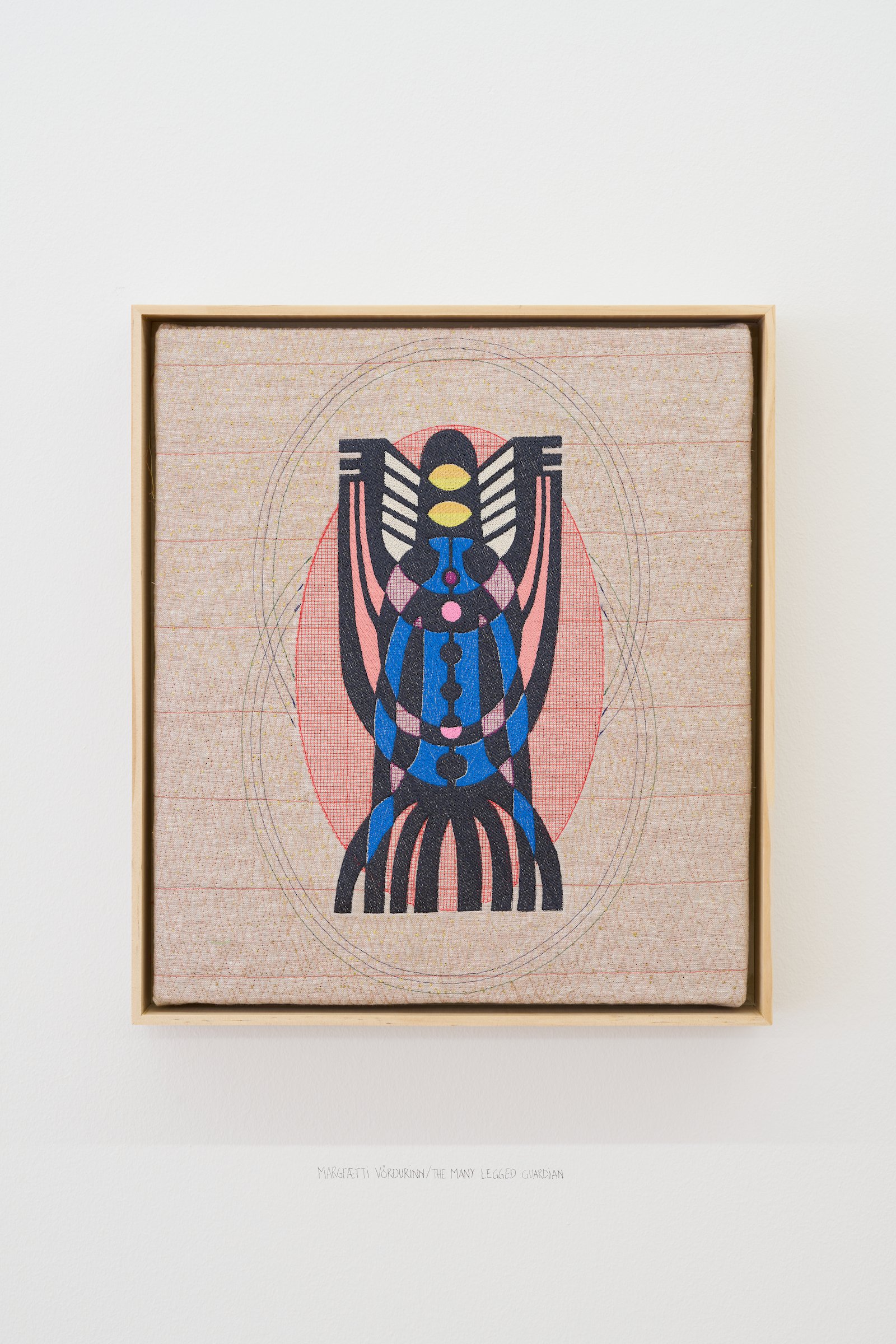
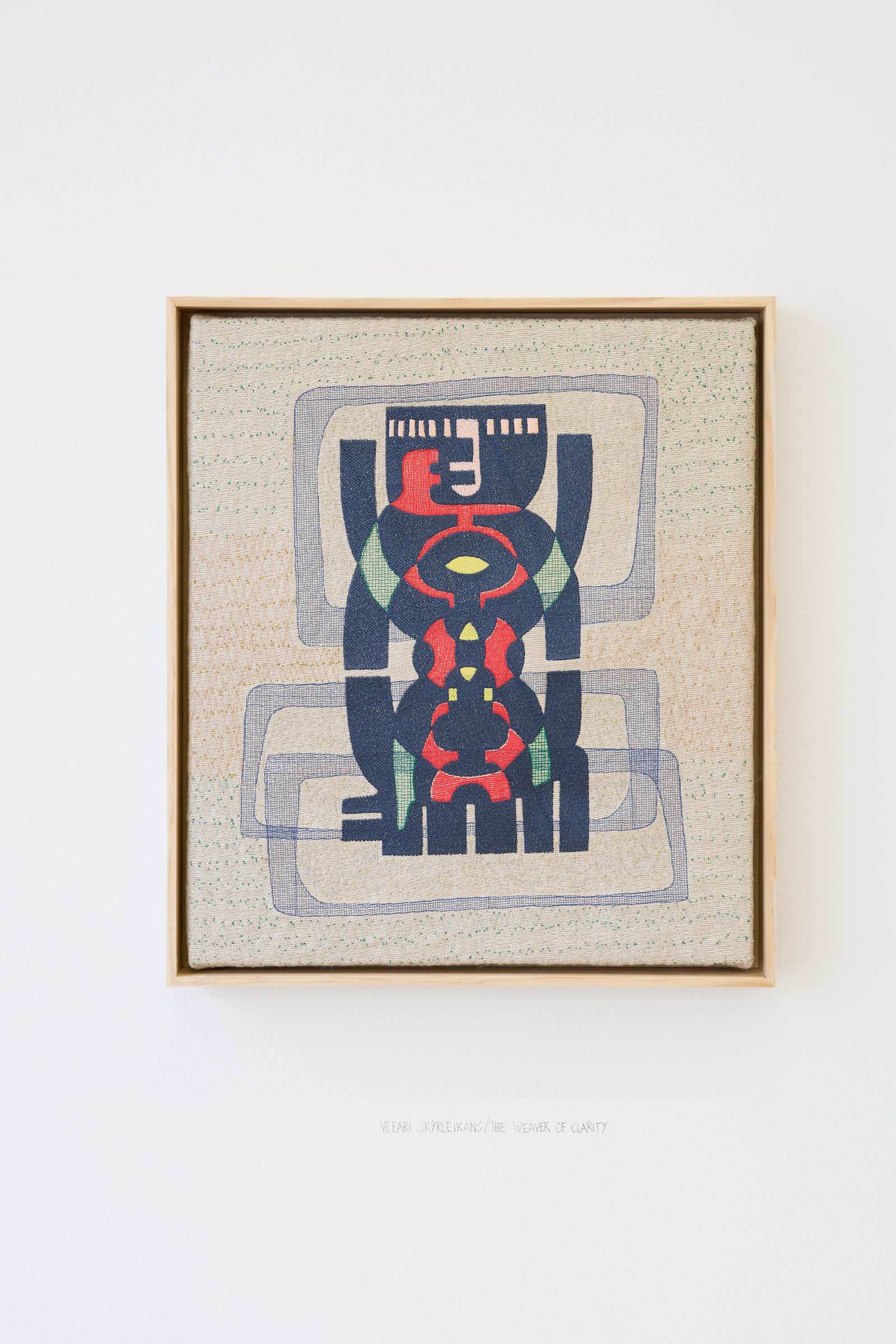
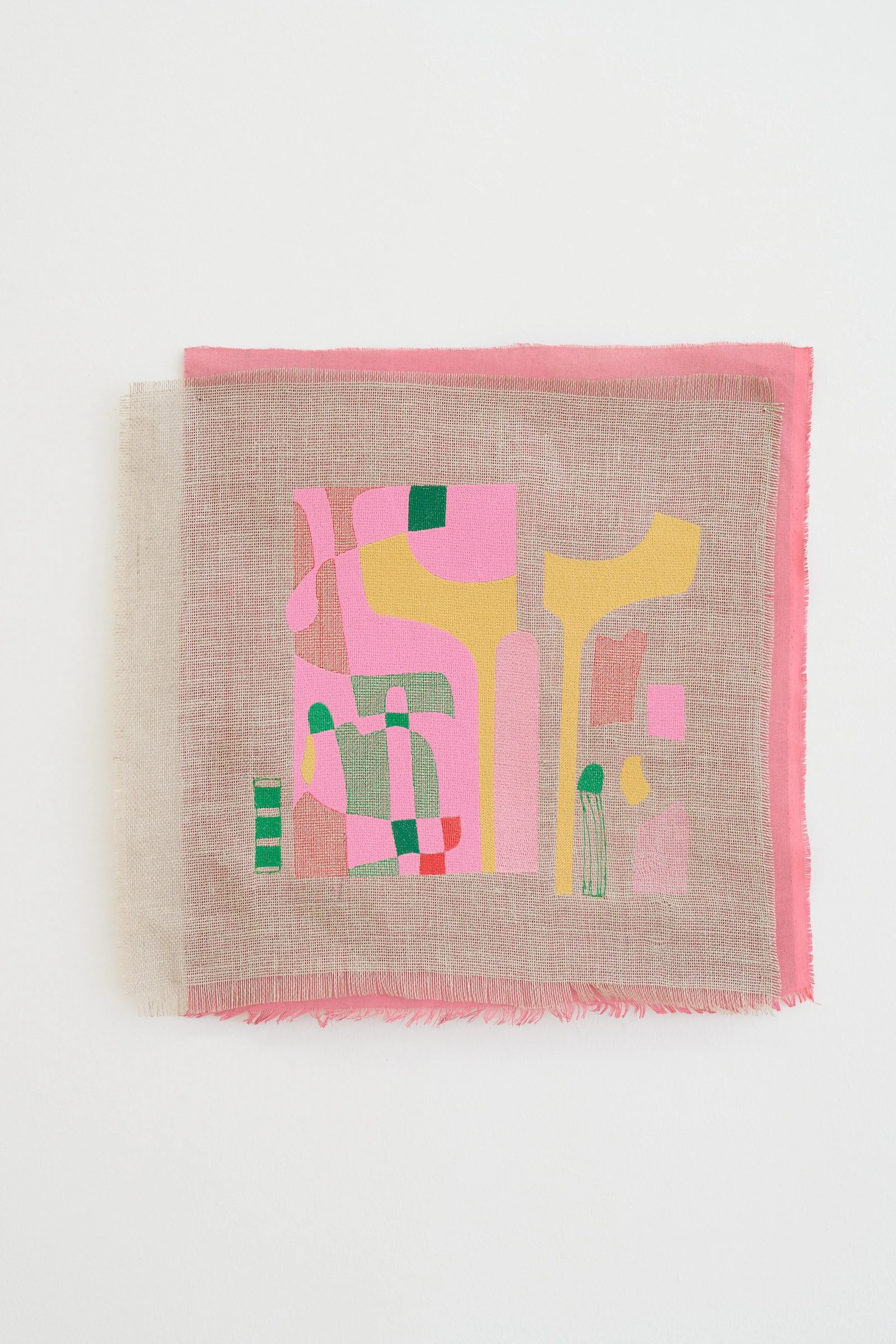
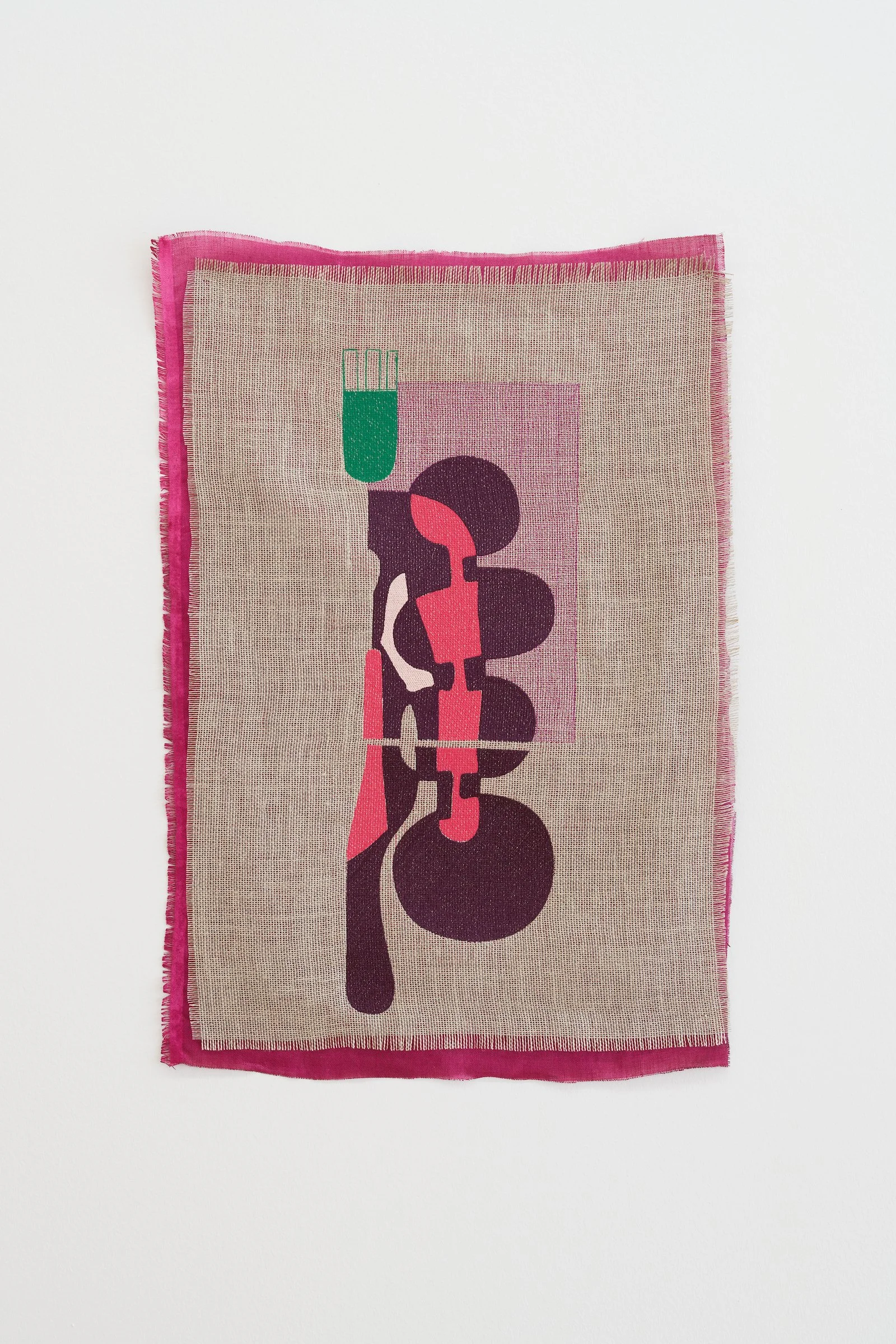
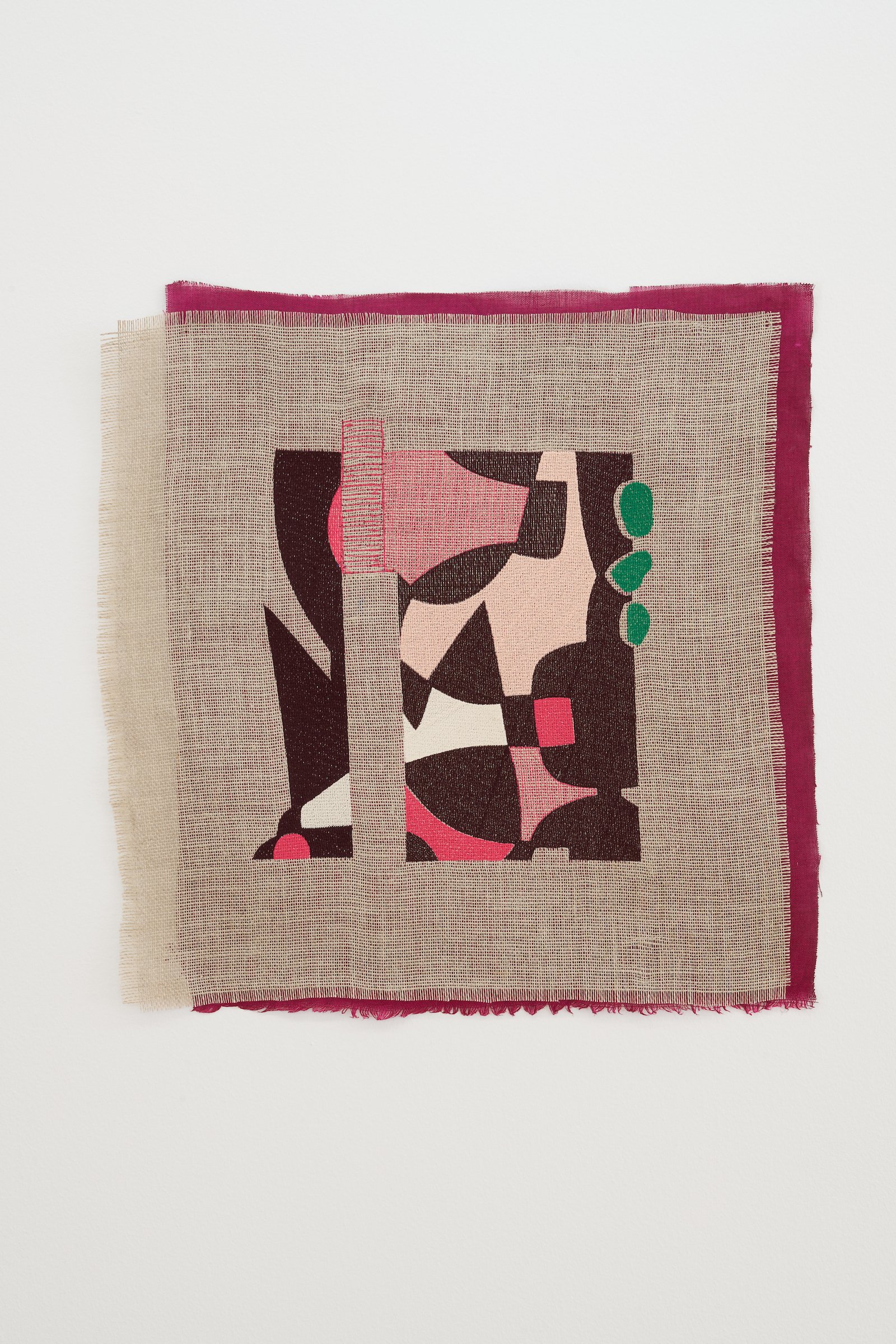
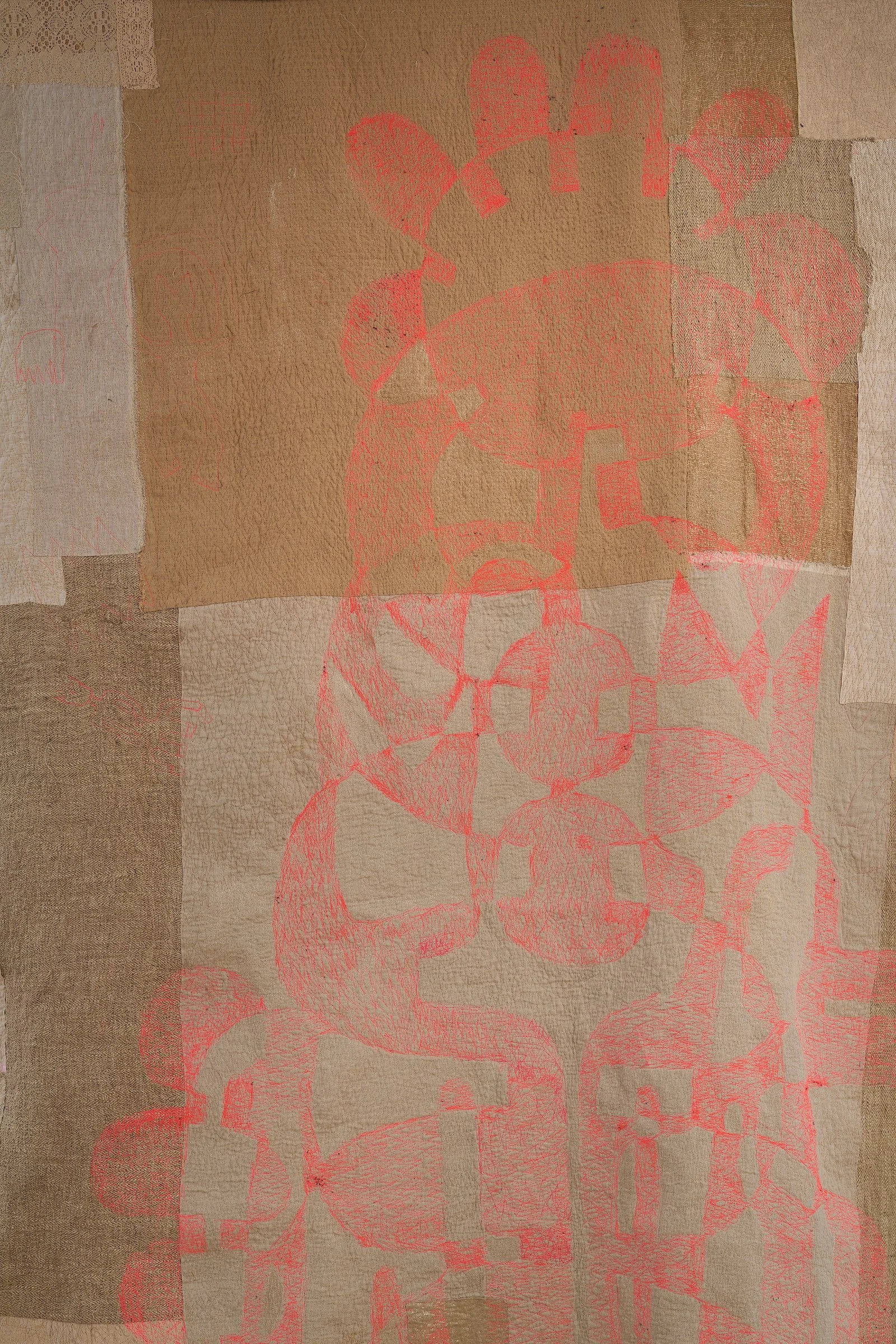
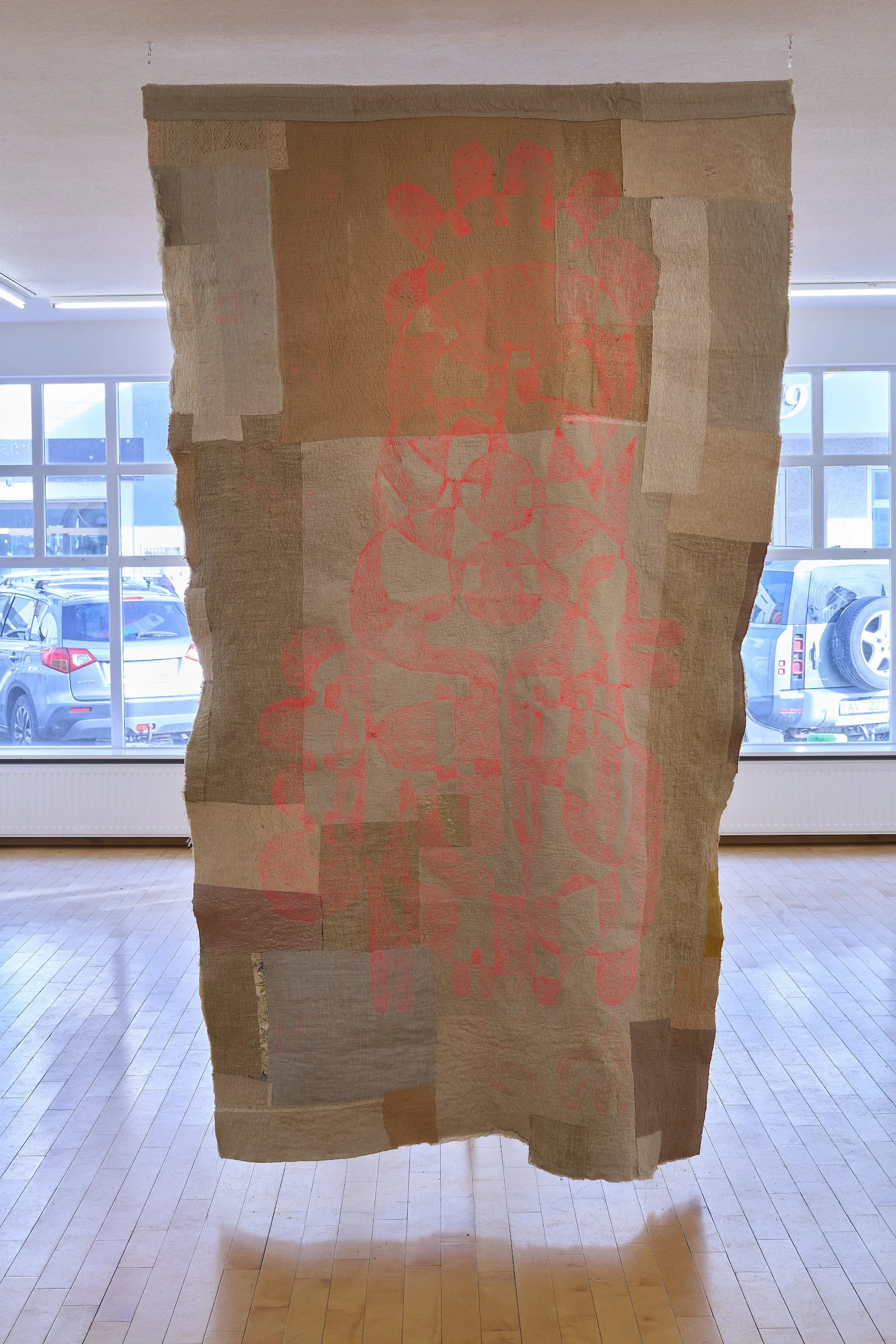
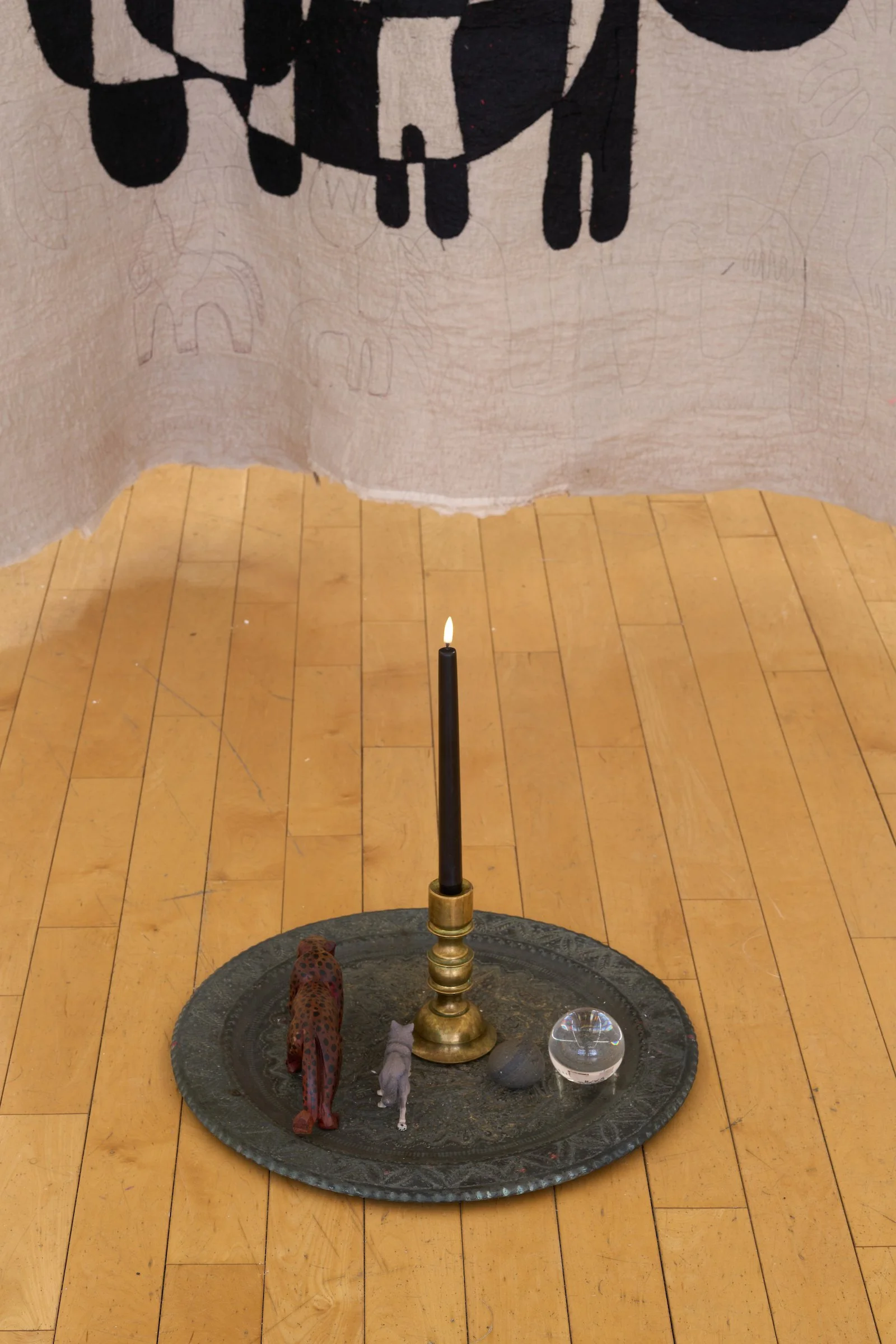
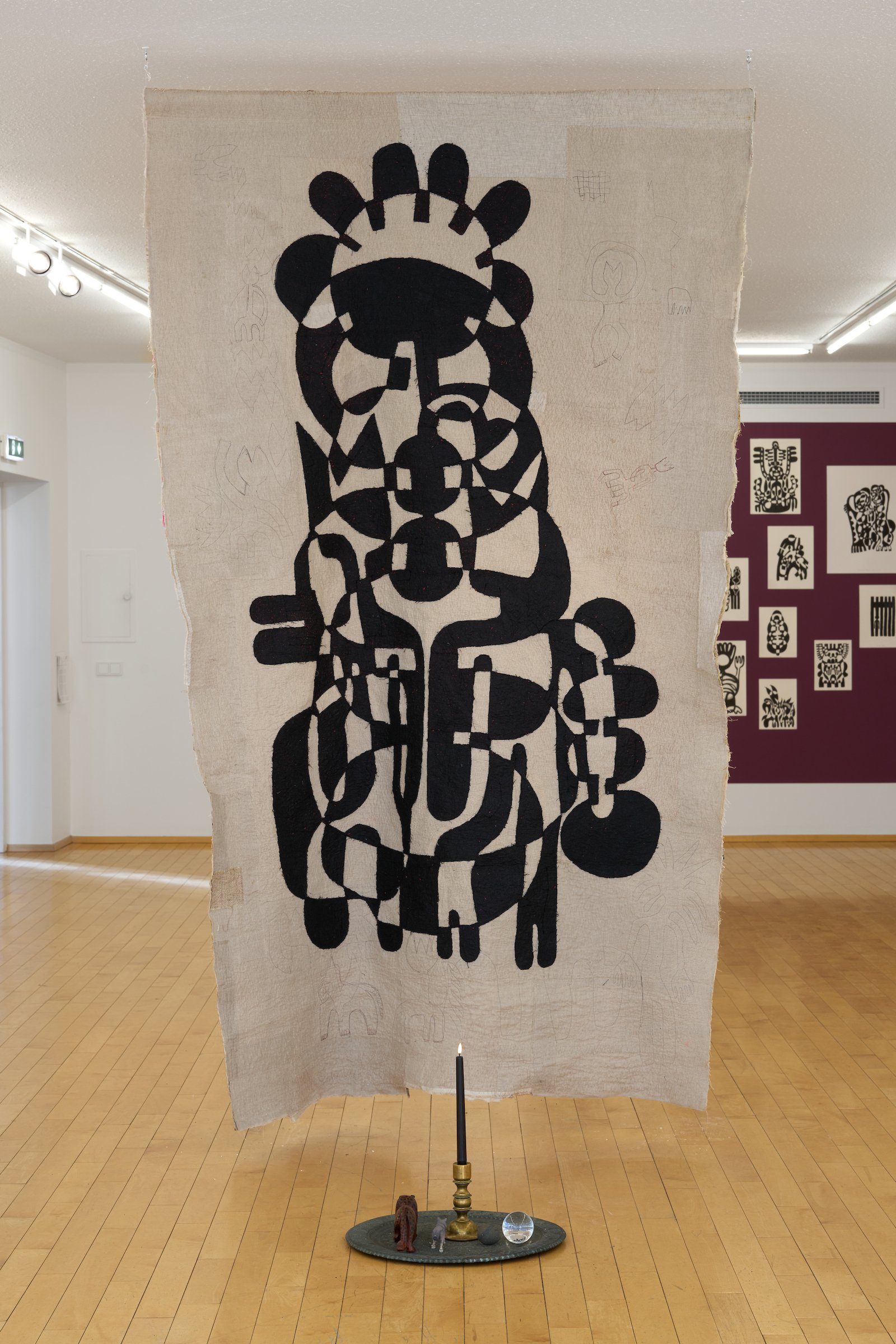
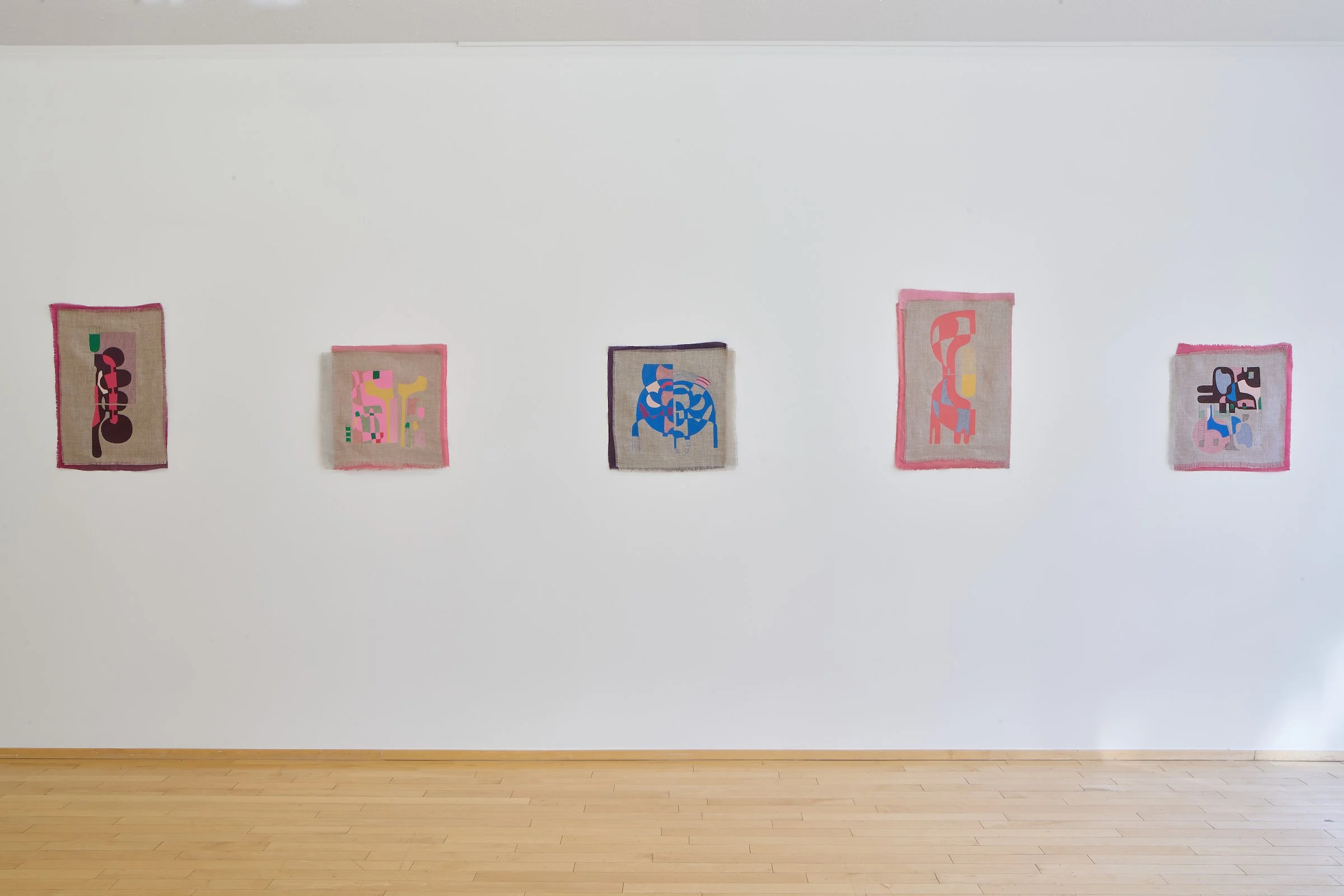
The textile works in the exhibition all originate in drawing. In some works, the drawing is transferred in its entirety onto fabric; in others, fragments of a drawing are used to create autonomous abstract compositions. In both instances, the drawing undergoes digital processing before being machine embroidered or sewn manually onto various textiles that may consist of leftovers or other recycled textiles. The fabrics are stitched together so that varying textures and colours subtly emerge between the layers. The stitch is not merely a means of fastening materials together; it functions simultaneously as line and form, becoming integral to the work’s composition. Ragna has long used the sewing machine as a drawing tool, but here she extends that approach even further. With coloured threads and varied stitch patterns, she constructs fields of colour and texture that may at times recall painting, as rich materiality and layered fabric fragments are sewn into a complex whole.
Ragna works in layers, both literally and metaphorically. In her practice, she moves between distinct states of mind and methods: from intuitive flow to digital processes, which demands precision and organisation, and then back to the craft where she continues to add layers of thread into the surface. Repetition is an essential part of the process; the same drawing may appear again in new works, though never in precisely the same way. Repetition is also evident in the way she repeatedly adds layers and threads to individual pieces, resulting in works that become progressively denser, both conceptually and in texture. Through this process, forms reflect and connect in works that echo one another.
Various influences can be discerned in Ragna’s work. Like many contemporary artists, she draws inspiration from diverse cultures and historical periods. She has travelled widely and has long been interested in textiles and patterns of Indigenous cultures from different parts of the world. Whereas she previously worked consciously with known forms and references, her recent works reveal shapes that have evolved into new and independent expressions emerging from her own inner world. In several works, figures appear that she calls deities, which she describes as carrying different energies. These beings seem to exist at the threshold between the human and the mythological, underscoring the spiritual dimension of the works. The titles further emphasize this approach, as Ragna discovers them through meditating on each individual piece.
Ragna’s work reminds us of the rich textile traditions that connect disparate cultures, in which textiles form an integral part of human life everywhere in the world. In recent years, textiles have also become increasingly visible in museums and major international exhibitions. Ragna’s work reflects this development, as textiles are no longer associated solely with craft but are recognised as one of the principal mediums of contemporary art. This shift owes much to the feminist movement and to the sustained efforts of numerous artists over recent decades to resist confinement to a single medium, instead choosing to work across diverse materials and disciplines. In a similar way, Ragna moves fluidly between visual art and textile design, participating in a broader contemporary tendency to expand the boundaries of craft, textile design and visual art.
Text by curator: Ingunn Fjola Ingthorsdottir
Photos: Vigfus Birgisson